
June 25, 2017
(This is a long, but critically important post that gets to the heart of good governance and why some Council Members act with such disregard for citizens and ethics.)
Milton’s ethics rules for Council Members are written 1) to deter complaints, and 2) to provide a tool for Council Members to prosecute Milton’s citizens and suppress dissent. In so doing, Milton’s Ethics Ordinance gives Council Members a license to misbehave. Got your attention? Well, it is true. Milton has an ethics ordinance that strongly favors protection of Council Members (Is anyone surprised?) over the submission of legitimate ethics complaints. Milton’s Ethics Ordinance is written to scare off even the most courageous citizen from making an ethics complaint. And Milton has included provisions that allow a Council Member to sue a citizen through the ethics panel for misuse of the ordinance. And because the City’s sole mechanism for enforcing Council Members’ ethics are citizens’ complaints, the result is that ethics are an extinct notion in Milton. Council Members can do as they please . . . and some do. You think we are exaggerating? Read on.
As stated in Friday’s blog post, the Georgia Municipal Association (GMA) has designated Milton as a “Certified City of Ethics.” To receive this designation, the City must 1) annually pass a resolution pledging to abide by five ethics principles and 2) enact an ordinance that meets GMA’s minimal ethics standards. The GMA even provides a sample ethics ordinance for use by cities. The GMA sample ordinance suggests language for various sections of an ethics ordinance.
The GMA does mention that some municipalities have concerns about misuse of ethics complaints for political purposes. The GMA states:
Some elected officials raised concerns about potential misuse of the ethics complaint process for political purposes. The governing authority may elect to remain silent on this issue and allow local ethics complaints to be filed and processed at any time or the governing authority may consider Alternative A or B below or draft another suitable alternative.
Following are the two alternatives suggested by the GMA:
Alternative A: To discourage the filing of ethics complaints solely for political purposes, complaints will not be accepted against a person seeking election as a city official, whether currently serving as a city official or not, from the date qualifying opens for the elected office at issue through the date the election results for that office are certified. The time for filing complaints will not run during this period. Properly filed complaints will be accepted and processed after the election results have been certified.
Alternative B: To discourage the filing of ethics complaints solely for political purposes, ethics complaints against a person seeking election as a city official, whether currently serving as a city official or not, which are filed between the date of qualifying for municipal office and the date of certification of the election results will be held and will not be processed until the election results for that office have been certified.
Notice that the language simply prohibits complaints from being filed in a narrow time frame in the run-up to an election. Did Milton choose either of these options? No. Rather, Milton ran amok and chose to craft a section entitled Wrongful use of this article, designed to ensure no reasonable citizen would ever file an ethics complaint. Six reasons are cited for wrongful use of the Ethics Ordinance. These cited reasons for “wrongful use” are both vague and broad, including: “complainant’s motives” and “publicity surrounding the filing of the ethics complaint.” And the list of reasons is potentially infinite as the Ordinance states the list is “without limitation,” meaning an ethics panel is free to formulate and select any number of other reasons that a complaint might be wrongful.
I assert that ethics charges should be judged on their own merits. Factors such as complainant’s motives and publicity about an ethics infraction are irrelevant. Milton’s ethics ordinance forces a citizen to essentially choose between writing a letter to the editor and filing an ethics complaint; apparently, a citizen cannot do both. Not only does Milton’s Ethics Ordinance strongly discourage ethics complaints, it also abridges free speech and exercise of other political rights. And to add insult to injury, should Milton’s Ethics Panel find that you did violate any of the items on the list “without limitation” of causes for determining a complaint is “wrongful,” penalties are listed that include criminal prosecution and payment of costs and attorney’s fees associated with processing the ethics complaint. And guess who ultimately determines guilt and penalties to be assessed? City Council is ultimately the prosecutor, judge, and jury for counter-complaints from fellow Council Members! And if that were not enough, in November 2016, City Council amended the Ethics Ordinance to grant Council Members an allowance of $5,000 per ethics violation for legal representation . . .
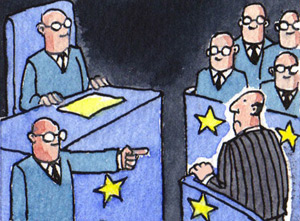
. . . So rather than being a tool for citizens and for good governance, Milton’s Ethics Ordinance has been turned into a tool for Council Members (who possess many advantages) to prosecute and suppress citizens. Does anyone believe that a reasonable citizen would ever submit an ethics complaint? And if no one will ever submit such a complaint, isn’t it fair to conclude that Council Members are not accountable for their actions? Does the flagrant bad behavior we see from certain council members now start to make sense? Our Ethics Ordinance essentially provides Council Members a free pass to misbehave. Our Ethics Ordinance effectively cuts off the one avenue (between elections) for ensuring our elected officials are held accountable for misdeeds.
Following is Milton’s wrongful use section of the Ethics Ordinance. The language is chilling and certainly meant to deter citizens from making ethics complaints. And keep in mind that the GMA suggests none of this language. Milton’s Council came up with this language on their own.
Sec. 2-896. – Wrongful use of this article.
(a) The purpose of this article is to endeavor to maintain a high standard of ethical behavior by city officials and employees. This will be most effective when city officials, employees, and citizens work together to set and maintain high ethical standards.
(b) In order to accomplish this purpose, ethics complaints shall be based on fact and have the intent to improve the ethical climate of the city.
(c) A wrongful use of this article shall occur if and when a frivolous, false, or politically motivated ethics complaint is filed in a negligent, reckless, or purposeful manner without a basis in law or fact and for purpose other than reporting a violation of this article.
(d) An ethics complaint is not frivolous if the complainant reasonably believes that facts exist to support the claim and either reasonably believes that under those facts the ethics complaint is valid under this article or acts upon the advice of counsel sought in good faith and given after full disclosure of all relevant facts within his/her knowledge and information.
(e) In deciding if an ethics complaint is a wrongful use of this article, the ethics panel shall consider the following, without limitation:
(1) The timing of the ethics complaint with respect to when the facts supporting the alleged violation became known or should have become known to the complainant, when the ethics complaint was filed, and the date of any pending election in which the respondent is a candidate or is involved with a candidacy, if any;
(2) The nature and type of publicity surrounding the filing of the ethics complaint, and the degree of participation by the complainant in publicizing the fact that an ethics complaint was filed;
(3) The existence and nature of any relationship between the respondent and the complainant before the ethics complaint was filed;
(4) If respondent is a candidate for election to office, the existence and nature of any relationship between the complainant and any candidate or group opposing the respondent;
(5) Whether the complainant knew or reasonably should have known that the allegations in the ethics complaint were groundless; and
(6) The complainant’s motives in filing the complaint.
(f) Allegations of a violation of this section shall be raised by the respondent as part of the respondent’s response to an ethics complaint.
(g) Allegations of a violation of this section shall be considered by the ethics panel considering the ethics complaint that is alleged to be a violation of this section. Evidence supporting and opposing the allegations of a violation of this section shall be presented at the same ethics hearing conducted with respect to the ethics complaint that is alleged to be a violation of this section.
(h) Upon a finding by the ethics panel that clear and convincing evidence of a violation of this section was presented at the ethics hearing, the ethics panel shall recommend to the mayor and the city council that the city impose any combination of the following penalties and actions:
(1) Public reprimand;
(2) Criminal prosecution for perjury; and
(3) Payment of costs and attorney’s fees associated with the handling and processing of the ethics complaint. For purposes of this subsection, the term “costs” shall include the staff time dedicated to processing the ethics complaint as well as copy costs and other directly attributable administrative expenses. For purposes of this subsection, the phrase “attorney’s fees” shall include the reasonable fees of the attorney retained, if any, by the subject of the ethics complaint as well as any fees necessary to be paid to the ethics panel attorneys.
I researched ethics ordinances in nearby cities: Johns Creek, Roswell, Alpharetta, and Sandy Springs. Only Johns Creek places any restrictions on citizens’ ethics complaints; Johns Creek adopted the language of GMA’s Alternative A (provided above). None of our sister cities has a Wrongful Use section in their code; Milton is unique in its attempts to stifle ethics complaints. City Council’s taking of such an adversarial stance toward citizens is just plain wrong.
(Note: It is also the case that no other sister cities provides compensation to their Council Members that Milton provides for “lawyering up” in preparing for and defending against an ethics complaint. This is based on a review of their ethics ordinances.)
Finally, consider this. Milton has crafted an ethics law that not only deters ethics complaints, but actually allows City Council Members to turn the tables on complainants and sue them in the same hearing for “wrongful use” of the article based on vague and broad definitions of misuse that include publicity around the ethic complaints or the complainant’s motives. The inherent advantages afforded Council Members almost assures a Council Member will beat an ethics charge, but also that the complainant will be convicted and punished. Through the “wrongful use” section of the Ethics Ordinance, City Council has turned a tool for citizens and good governance into a tool for prosecuting citizens and stifling dissent. It is yet another example of City Council putting citizens outside of government instead of at the center of government.
Citizens, it might be time to file an ethics complaint that presents a legal challenge to the City’s heavy-handed and unlawful Ethics Ordinance. I am confident that Milton’s Ethics Ordinance would not stand up to a legal challenge.
Lastly, thank you for staying engaged in the cause for good governance. Only through citizen engagement can we achieve the government we deserve.

Tim Becker
 Milton Coalition