Milton City Council

Council Member Hewitt Resigns. All the Best, Burt!

Hewitt

April 26, 2018

On Monday night, Council Member Burt Hewitt resigned from Milton City Council.  Hewitt and his family will soon be moving out of Milton.  Hewitt was my favorite member of the legacy city council.  His departure is a loss for the City.  I liked Hewitt for a number of reasons.

First and most importantly, Hewitt was not an opportunist.  That is, it never struck me that he was on Council to further his personal/business interests or to feed his ego.  I am convinced that 80+% of politicians are (mostly) opportunists.  They would embrace Nazism for a few extra votes or more applause; their principles are infinitely malleable.  Not so with Hewitt, who I think was able to largely separate his personal/business interests from his elected duties.  Hewitt clearly articulated the simple principles that motivated him, and he usually applied those principles to his voting.  Citizens usually had a pretty good idea about how Hewitt might vote on an issue.

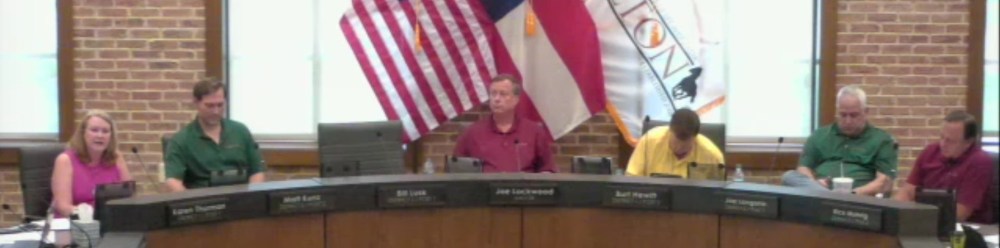
Milton City Council Wishing They Were Elsewhere

Hewitt also had a voting record that mostly aligned with the prerogatives of citizens.  He was on the right side of most issues.  This mostly spared him the ire of ordinary citizens.  He was not a lightning rod for controversy, although he did occasionally delight in swiping at a few local political nut-jobs.  And Hewitt did not suffer fools lightly.  You knew when Hewitt was annoyed with some of the Council nonsense that sometimes passes for governance in Milton.  He would fidget, look at the ceiling, twirl his pencil, and or engage in other diversions to channel his impatience with other Council Members that loved to hear themselves speak.

The special election for Hewitt’s District 1 seat will be held in November 2018.  The next scheduled election for this District 1 seat will be conducted in November 2019, so the candidate that wins the special election will have to stand for run for re-election at that time.  Hopefully, Milton will elect a District 1 council member not unlike Hewitt or our new Council members Bentley and Jamison, who are doing a terrific job representing citizens.

Farewell, Burt.  You will be missed.  I wish you continued success in all your endeavors.  And keep that twisted sense of humor in check.

Tim Becker

Good Governance, Milton City Council, Smart Land Use

Birmingham Crossroads Variance Denied: Utopia Lost?

Utopia Vs Dystopia

April 24, 2018

Last night, the Birmingham Crossroads variance was denied.  This was absolutely the right decision.  It was a victory for citizens.  I am quite sure that the variance would have been approved if citizens had not protested so loudly and had not shown up in numbers to express their opposition.

A false choice was presented last night between Utopian and Dystopian futures for the Southeast corner of Birmingham Crossroads . . . both futures conveniently created by the applicant. 

Utopia and Dystopia

The Utopian vision was the developer’s proposal to build a wonderland without a buffer.  His vision was colorized.  There were beautiful artist renderings–mostly in rich and verdant greens.  There was a quaint village feel . . . you could almost taste the front porch lemonade and see forest sprites peeking from behind the bushes and trees.

The Dystopian vision (of the parcel with a buffer) was drab . . . painted in black, grays, and white.  No beautiful artist renderings . . . just a sterile, two-dimensional site plan.  The buffer was merely a white rectangle . . . a featureless no man’s land.  No quaint village, but rather dreary proletarian housing.  This was the developer’s “threat plan” . . . what he asserts he will build if denied his variance.

The contrast was stark.  It might have hoodwinked some Council members, but citizens were not fooled for a second.  Grizzled veterans from previous zoning battles once again streamed into City Hall to let Council know unequivocally that we were not buying what Oak Hall was selling.  With some obvious reluctance (from some council members), Council sent the developer and his attorney packing.

The denial of the variance certainly cheered citizens.  However, the biggest victory was for good governance.  The rule of law in Milton was upheld.  The importance of this victory cannot be overstated.  You see, before the meeting, Mayor Lockwood has asserted “Average citizens does not care about process.  They only care about outcomes.”  He further asserts that process was only important to a very small group of citizens, like me, that follow city government.  I will never accept this notion.  Never.   Last night citizens strongly asserted that they do care about process . . . about the rule of law . . . about fairness . . . about transparency . . . about honesty . . . about competence.  These are all elements of a good process.  And I think citizens believe–at least instinctively–that a good process will lead to good outcomes.

Generally (but sometimes reluctantly) I have supported Mayor Lockwood.  However, I find Mayor Lockwood’s opinions about “average” citizens troubling and just plain wrong.  Of course, on any given issue, Mayor Lockwood has a more informed opinion than an “average” citizen, but that does not mean Mayor Lockwood is right about any particular issue.  And more importantly, I assert that the collective wisdom of citizens always trumps the wisdom of 7 council members.  Always. 

Mayor Lockwood protests that council members are not monkeys and that if it were so easy, a computer would make all of the decisions for the city.  What he is implying is that we expect elected officials to exercise judgment.  And I wholeheartedly agree with him.  However, that judgment must be exercised within the boundaries of the rule of law.  So yes, process, which includes adherence to the rule of law, is important.  In fact, process and the rule of law ensure that citizen prerogatives are protected and advanced, as it keeps politicians in check.  Process and rule of law devolve power to the people and away from politicians, much to the chagrin of most politicians.  So yes, we expect good judgment from elected officials, but also respect for the rule of law.

Last night’s denial of the variance also produced other victories for citizens.  Citizens once again faced down a developer who had been effective in his intimidation of Council.  A strong message was sent to developers that threats will not work in Milton and, in fact, might actually backfire on developers.

With the denial of the variance, Council also avoided setting a dangerous legal precedent–i.e. that buffers and setbacks are malleable.  Variance approval would have prompted other developers to demand equal treatment, and buffers and setbacks all over Milton would have been vulnerable.

Thanks

Thanks to citizens that showed up and spoke up at this hearing and the previous hearing, including Julie Bailey, Cleveland Slater, Bill Bailey, Joan Wunderle, Daniel Fernandez, David Damiani, Sharon Mays, Kurt Nolte, Vince Taylor, Joe Whitley, Tony Outeda, and Heather Creran.  Thanks also to Arnie Moore and Diane Maloney, who showed up to speak but were not permitted because of a technicality.  Thanks also to the many citizens that showed up to support the speakers.  Lastly, thanks to all of you that visit this blog.  Over the last 48 hours, the blog has logged nearly 900 visitors and over 1,100 hits.  Please consider subscribing to the blog to receive posts by email as they are published.  Informed and engaged citizens are key to good governance.

Advocating to clean, competent, courageous, and citizen-centric government,

Tim Becker

Good Governance, Milton City Council, Smart Land Use

Citizens, Please Stand Up for the Rule of Law at Tonight’s City Council Meeting

19f0c701ce4abc910b423c9c54b2a3a2

April 23, 2018

First, thank you for your outpouring of support.  In the last 24 hours, over 650 Milton citizens have come to the Milton Coalition blog for information.  There has also been an uptick in folks signing the Milton Coalition petitions for smart land use . . . 20 new signatures and counting.  And I know many of you have written letters to Council and have forwarded my call-to-action email to friends and neighbors.  Thank you.

Please consider coming to tonight’s meeting and speaking.  It is important for Council to hear directly from citizens at Council meetings, and it does make a difference.  Tonight’s council meeting begins at 6 pm and is at City Hall.  You will need to complete and turn in a speaker card, which takes only a minute.

Following are some insights on the tonight’s Crossroads variance hearing.

Outpouring of Citizen Opposition.

My understanding is that Council has received an onslaught of letters in opposition to tonight’s variance request.  So that means that Council will deny the request, right?  The answer is absolutely NOT.  In the past, I have heard various self-serving and ridiculous responses from Council members for disregarding citizen letters.  And I believe that right now a majority of council is leaning toward approving the variance.  Nevertheless, letters do matter, so keep sending them.  Every little bit counts.  And speaking at council matters even more and is critical to beating back this variance request.

It will be interesting to note if any Council Members even mention the overwhelming citizen opposition.  They certainly should.  The November 2017 election was predicated on “shifting power back to citizens.”  What does it say about our Council if they vote to approve the variance in the face of such strong citizen opposition?  Reference to citizen opposition is one (of many) indicators of how Council might vote . . . a positive indicator.

Legal Precedent

Several readers reminded me of the importance of legal precedence with this variance.  Legal precedence is one of the most important reasons for denying this request.  These sorts of decisions have a tendency to ripple throughout our community.  Entirely eliminating the buffer and setback is a really big deal.  Other developers will certainly demand equal treatment.  And of course, granting this variance would put developers in a better position to win future legal battles against citizens.   Think about that undeveloped land near you and the buffers and setback being reduced or even eliminated . . . 

Be aware that tonight a Council Member may ask the City Attorney if a variance approval will set a legal precedent.  This is a cynical ploy to tamp down citizen opposition.  The City Attorney always states that each zoning case stands alone and does not set precedent.  However, remember that the City Attorney’s job is to protect the City.  The City Attorney cannot be recorded to say that a zoning decision sets precedent, as that would hurt the City in future lawsuits.

Creative Math

In making these decisions, each Council member has to go through a calculus of sorts.  There are upsides and downsides.  Pros and cons.  However, in this case, even under the worst case scenario, I do not understand how any Council Member could vote for this variance.  So what is the worst case?  The developer builds 30 homes instead of 25 and the separation between houses goes from 10 feet to 0 feet.  So to get this result for citizens, what is the cost?  The downside?  The cons?  Well, since you asked . . .

  1. A loss of citizen confidence and trust in government, resulting from rejecting overwhelming citizen opposition.
  2. Encouragement of corruption and loss of confidence in government resulting from a disregard for the rule of law.  Variances require a finding a hardship.
  3. A dangerous legal precedent is established–i.e., buffers and setbacks can be more easily reduced or eliminated.
  4. Encouragement of other developers to threaten Council to bend the rules for their benefit.  In approving this variance, council would continue a long history of indulging developers that has resulted in vast amounts of staff and Council time being spent on ridiculous developer proposals.  This vicious cycle needs to be ended once and for all.  A line must be drawn in the sand.
  5. Loss of over 1 acre of greenspace at the same time the City is buying greenspace.  That makes absolutely no sense.
  6. A chance to create an even better development with a buffer.  Council is overlooking the possibility that the developer might actually come back with a better proposal that includes the buffer.

And remember that the worst case scenario is a threat and likely a bluff, as we have witnessed many times in the past.  Folks,  the bottom line is that the calculus for approval just does not pencil out.

Striking A Good Deal For Citizens?

Beware.  If it seems the variance is going to be approved, you will see conditions added to approval of the variance.  This is standard practice in these proceedings.  It is meant to make citizens and Council members feel better about the outcome.  However, the addition of conditions is mostly political theater and meant to provide cover for an unpopular vote.  You must understand that developers view these proceedings as a negotiation from Day 1.  Accordingly, they generally submit proposals that they know are prima facie unacceptable.  This creates negotiating “head room” while allowing Council to save face.  Additionally, over the past 2+ years, I have noticed that Council is a terrible negotiator.  (I say this as someone who has taught classes and written articles on negotiation.)  Council consistently makes rookie mistakes, like negotiating with themselves and laying all their cards on the table.  It can be painful to watch.  But make no mistake about it . . . approval of a variance with conditions would be the classic Pyrrhic victory.  Council needs to stand strong and deny this variance.

Please consider speaking at tonight’s council meeting.  Let’s once again face down developers that are seeking to bend and break our rules through coercing Council.  Let’s stand up for the rule of law.  Let’s make it clear to Council that citizens are in charge.  As always, thank you for your strong support for good governance in Milton.

Advocating For Smart Land Use,

Tim Becker

gg

Good Governance, Milton City Council, Smart Land Use

Birmingham Crossroads Variance Application: Rule of Law vs. Jungle Law

Wilbur and Rudy's

Gradually, I have concluded that the Birmingham Crossroads variance request for the SE corner is more important than any issue that has come before Council since I become involved in November 2015 . . . more important than even the CSO and the subsequent Ebenezer rezonings.  I say this because the Crossroads variance request concerns the essential role of City government.  It involves fundamental issues of rule of law and due process.  Council members must decide whether (or not) they take seriously their oath of office, which requires them to uphold the U.S. Constitution and the laws of Milton.  And this includes long-established laws and practices for granting variances.  Yes, it is that simple . . . and yes, it is that important.

oath of office

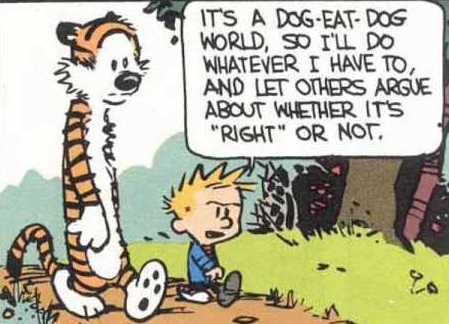
Some council members have asserted that citizens do not care about process—that is, how government works; rather they assert that citizens care only about outcomes.  Such sentiments are not only wrong; they are dangerous.  Essentially, such politicians are asserting that the ends justify the means.  If our city processes do not lead to the “right” outcomes (according to a subjective determination by these politicians), then it is fine (for City Council) to disregard or subvert government processes.  Of course, this is a recipe for chaos and manipulation.  And, in fact, we have witnessed such chaos and manipulation in Milton over the past few years.  Furthermore, this failure to respect the rule of law concentrates power in politicians, not the people.  Council meetings become cage matches or a Night at the Improv.  Every issue gets duked out at Council, with governance becoming essentially an exercise in subterfuge and improvisation.  And this disrespect for process has created an environment that allowed certain politicians—some still sitting on Council—to advance (mostly in the shadows) the interests of Special Interests (primarily developers).

The variance process is relatively straightforward.  It is intended for minor deviations from zoning laws.  The American Planning Association provides the following examples:  “a house will be a foot too close to a lot line or a few feet too tall, or the lot does not quite meet the minimum size for the zoning district, or a commercial business has one or two parking spaces fewer than the zoning ordinance requires.”  Entirely eliminating a 75-foot buffer (over an acre of greenspace) is not minor.  (Note:  It is disconcerting that Council would even consider reducing greenspace in Milton, given that 82% of voters approved the Greenspace Bond in 2016.  It is also worth noting that this is the second reduction in greenspace at the Crossroads, as Council previously approved a reduction of the village green in the Publix shopping center to allow construction of an interior roadway and additional parking.)

The standards for variances have not changed in 100 years and are unambiguous.  An applicant must prove that enforcement of zoning regulations would cause “undue hardship” to the applicant.  In the Crossroads case, the applicable zoning regulation is a requirement for a 75-foot wide buffer (and additional 10 foot setback) between the mixed use parcel and the AG-1 parcel that comprise the proposed development.  In its recommendation for denial of the variance, city staff made a compelling case that the required buffer does not represent a hardship in developing the property.  Furthermore, the applicant’s attorney even admitted that the buffer did not represent a hardship in developing the property.  You read that correctly . . . even the applicant admits to no hardship.  Confusing, huh?  So Council determined on its own that there was a hardship?  No, the truth is that Council did not even consider, even for a moment, the central and dispositive question of hardship.  The word “hardship” was never uttered.  Staff’s analysis of hardship was never considered . . . or even acknowledged.  The comments of several citizens similarly fell on deaf ears.  There was a total lack of any sort of process . . . not even a nod to good governance.  No rule of law, but rather Milton’s version of jungle law.

So what did Council discuss instead (of hardship) and why did Council eventually defer the matter of the variance?  Well, the applicant’s zoning attorney threatened that if the variance was denied, the developer would cram town homes onto the site . . . adding “and it won’t look pretty.”  So Council reprimanded him for making threats, right?  WRONG.  No one on council uttered a peep in defense of the citizens.  Rather, Council engaged a long and convoluted discussion of hypotheticals about what might get built if the variance is denied.  The applicant baited Council with his threats and Council eagerly took the bait.  Council proceeded to air Milton’s legal dirty laundry before an applicant that has threatened to sue the City if the variance is not approved.  Council sure gave him plenty of good material for his lawsuit.  Council asked staff for its opinion of what might get built and heard several and conflicting answers to this question.  Mayor Lockwood, who is responsible for the running of Council meetings, allowed yet another Council meeting spiral out of control . . . reminiscent of the first Ebenezer hearing.  Council eventually realized it had entered a legal quagmire and voted to defer its decision on the variance.  However, by this time, the damage had already been done.  It was a sorry display.  Most importantly, the issue of what might get built, while interesting, is not relevant in adjudication of a variance application . . . period.

Are you getting the picture?  A complete and utter lack of process resulted in a long and painful hearing that damaged the City’s future legal position in this matter, with Council opting to kick the can down the road.

Had Council followed good governance processes, Council deliberations would have lasted less than 5 minutes.  Here is how council’s last hearing should have gone down.  Council Member asks “Is there a hardship?”  No says staff.  And even the applicant admits this fact . . . no hardship, no variance . . . . motion for denial . . . denial approved.  Case closed.  (BTW, some citizens have been discussing suing the City; I cannot imagine a court upholding a variance approval without a finding of hardship.)

Bluffing

So putting aside the issue of process, should citizens be concerned about what might get built at the Crossroads?  I do not think so.  Ultimately, what the developer will build if the variance is denied is unknown and unknowable.  Currently, Oak Hall is seeking eliminate the buffer and build 25 single family detached (with only 10 feet of separation) homes.  If the variance is denied, the builder has asserted that he will build 30 townhomes and has submitted a drawing that some Council members are calling the “threat plan.”  However, threatening to build higher density and/or ugly houses is a common tactic, but usually a bluff.  Remember the Ebenezer rezoning when the developer submitted a plan for 48 homes on 65 acres; he also threatened to drain the pond and cram in 55 homes.  However, he is currently building 21 homes on (the most attractive) 38 acres; it is doubtful that the remaining 27 acres will support more than an additional 9 homes, for a total of 30 homes (vs. the threatened 48 homes).  We’ve seen the “idle threat” tactic also used with the Reserve at Providence and the Hamby Road sewer extension.

What actually gets built is ultimately a function of marketability, financing, and other factors—many known only to the developer.  So comparing the current application to some hypothetical “threat plan” is a false choice, reminiscent of the dishonest assertion that the development across from CHS was a choice between a church and 27 townhome units (when, in fact, the land was zoned AG-1 and should have been built out as an AG-1 development for a maximum of 8 homes).  And is there really much of a difference between townhomes and detached homes separated by 10 feet?  Both will look out-of-place at the Crossroads.  And wouldn’t it be better to shield whatever gets built with a tree buffer?  The point is that whatever gets built will likely not be appreciably worse than what is currently proposed . . . and it might actually look better provided that we don’t cave to the developer’s threats.  And a buffer will ensure that anything unsightly will be mostly hidden from view.  Council needs to call the developer’s bluff and send him packing.  (BTW, Oak Hall is the same developer that obtained rezoning and variances for the first high density “conservation” subdivision in Woodstock and then promptly flipped the property to Pulte, which built exactly the sort of development that you would expect from Pulte.)
the-rule-of-law-web

I urge citizens to write to their City Council members.  Demand that they uphold the rule of law and deny this variance.  Please also consider attending Monday’s Council meeting to demand that Council do their darn job, stand up for citizens, and stop indulging the threats of developers.  Your voice matters and needs to be heard loud and clear.  It is time that Council draw a firm line in the sand and stop these nonsense applications for zoning changes that consume vast amounts of staff and Council time . . . time better spent on adopting good governance practices and processes that will achieve better outcomes for citizens.

Lastly, I am not naive to the fact that bad process resulted in the bad outcomes that Council is dealing with.  Legacy members of Council bear some responsibility for the difficult issues at the Crossroads.  However, the solution is NOT to continue to apply bad process to correct these past bad outcomes.  Such an approach only perpetuates the cycle of poor decision-making and leads to even worse outcomes.  The solution is to follow the process wherever it takes us.  And if we believe the outcome is suboptimal, then we need to fix the process.  That is how the rule of law works.  If you don’t like the law and its outcomes, then you change the law.  You don’t subvert or manipulate the process to achieve outcomes.  That model ultimately plays into the hands of developers, who have much more time, resources, and expertise to manipulate a bad process.  Council members that don’t understand or believe this are naive . . . and I suspect are being played by other Council members with strong ties to the development industry.

Advocating For The Rule of Law,

Tim Becker
Calvin