
June 2, 2018
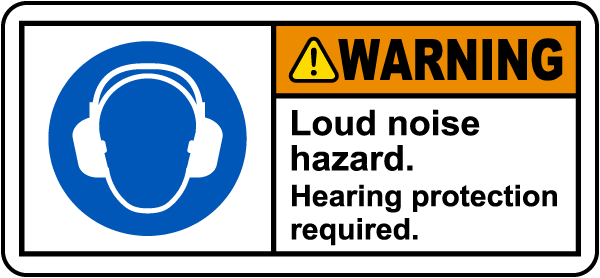
Originally, I was an enthusiastic supporter of allowing a carefully conditioned music venue on the northwest corner of Birmingham Crossroads. Now, I am a strong opponent of such a music venue. A number of factors drove my thinking on this matter and my ultimate opposition. In my first post in support of the original proposal, I indicated that the devil was in the details and that I would reserve judgment pending the revelation and analysis of those details. And now that I know and have studied the details, I am confident that the developer’s proposal, which is wildly different from his original proposal, would be quite harmful to the community. In this post, I want to focus on the Achilles Heel of the developer’s proposal: the application of an 85 decibel (db) standard at the property line. Quite simply, the precedent set by adopting this standard would be a disaster for Milton. Homeowners would be subject to noise at more than 4 times the loudness currently allowed by law . . . noise so loud that it can damage hearing (if exposure is sustained) . . . noise so loud that OSHA requires hearing protection . . . noise so loud that it will agitate pets and horses, which are more sensitive to sound . . . noise so loud it does not allow property owners to enjoy their property and likely lowers their property values.
To fully understand the reasoning behind this requires a little bit of science.
First, every increase of 10 decibels represents a doubling in loudness. So 75 db is twice as loud as 65 db. And 85 db is 4 times as loud as 65 decibels. So applying an 85 db standard for continuous noise, rather than a 60 db standard, is a really big deal. Following is a chart that provides examples of sound/noise at various db levels.


Using a decibel meter, I captured a number of readings around my home:
|
Sound Source (at 3 feet unless otherwise noted) |
Decibel Level |
|
Backyard Ambient |
49.0 |
|
Microwave Oven |
63.9 |
|
Electric Clothes Dryer |
67.3 |
|
Heat Pump outside unit |
73.4 |
|
Garbage Disposal (just water running through it) |
80.2 |
|
Electric Leaf Blower (normal running) |
85.3 |
|
Cordless Stick Vacuum |
85.3 |
|
Cordless Electric Leaf Blower (turbo) |
89.5 |
| Cordless Hedge Trimmer (running, not cutting) |
95.1 |
|
Cordless Electric Weed Wacker (running, not cutting) |
95.5 |
| Cordless Electric Chainsaw (running, not cutting) |
96.7 |
So 60 db (e.g., a normal conversation) is fairly quiet. 85 db (e.g., a freight train at 100 feet traveling 45 mph or an electric leaf blower at 3 feet) is considered very loud to the point that sustained exposure can damage hearing. Noise at the 75 db and above level is annoyingly loud to some humans; some animals find noise annoying loud at even lower decibel levels. No sane citizen would want such noise at or beyond their property line.
Second, the decibel level is inversely proportional to the distance from the source. A doubling of the distance from the noise source results in a reduction of 6 db. So 85 db at 50 feet is 79 db at 100 feet; 73 db at 200 feet; 67 db at 400 feet; and 61 db at 800 feet. So applying the current proposed standard (of 85 db), music from this proposed music venue might not be reduced to the level of a normal conversation until it reaches more than 800 feet from the sound stage. And it would not be reduced to ambient noise levels until 3200 feet from the sound source, meaning music would envelope most/all of Birmingham Park, which abuts the proposed venue. Such a music venue is singularly incompatible with a passive park.
Note that 85 db at 200 feet is worse than 85 db at 50 feet. This is important because a bigger venue, where the sound source is further from the property line, would cause higher noise levels over a larger area. 85 db at 200 feet would be 79 db at 400 feet; 73 db at 800 feet; 67 db at 1600 feet; and 61 db at 3200 feet. So residents near a music or other noise-making venue where the sound is 85 db at a property line 200 feet from the sound source, would clearly hear the music more than ½ mile away. And neighbors within 600 feet of the property line would be exposed to annoyingly loud music. Imagine music in quiet AG-1 areas of Milton that, at the property line, is as loud as a snow blower or a passing diesel truck or a blender.
Some might ask why I did not identify this issue earlier. The answer is that the data had not been made available and staff had not decided on a standard. At the Community Zoning Information Meeting (CZIM), the developer indicated that a noise variance might not even be needed. Tests were to be conducted that would determine whether the variance would be required. Well, the tests showed that the proposed facility failed miserably the requirement that continuous sound be ≤ 60 db; these results were presented at the Planning Commission meeting. (I am a little suspicious of the measurements because continuous and peak measurements were both 75 db. Peak should be significantly higher as music continually varies in loudness. The requirement of 75 db for peak sound was barely met.) Additionally, staff decided to apply the standard (85 db) for commercial noise in commercial areas; this standard was published in staff’s analysis for the Planning Commission. If I had possessed the above information at the CZIM, I would have opposed the music venue proposal from the get-go
Applying commercial noise standards to this music venue is ridiculous. The land in question is not zoned commercial. It is AG-1. Different (and more stringent) standards have been and need to be applied to uses in predominantly residential areas. 85 db in commercial areas in Crabapple and Milton might be acceptable. However, areas away from commercial districts need to hew to a stricter (i.e., lower db) standard. And that is why standards of 60 – 65 db for continuous sound and 75 db for peak sound are applied for festival and special event facility permits. And in fact, a 60-65 db standard has previously been applied to Special Event facilities in Milton. In the case of the Little River Farms special event facility, a 65 db standard was applied; actual measurements of sound were 40-45 db. In the case of a Special Event facility on Hopewell Road, a standard of 60 db was applied; the applicant did not apply for a variance to this requirement.
So why can these other facilities meet the requirements and the Crossroads venue cannot? The reason is that the subject property is severely limited by size, geometry, and features (e.g., a power line that runs through the property). Thus, the sound source must be located close (50 feet) to a property line. Bottom-line, the property is ill-suited to a music venue. It is that simple.
Furthermore, applying a commercial standard of 85 db gives the proposed music venue the capacity to double their current volume from 75 db to 85 db in the future. This would allow for much louder types of music, which means this venue could easily morph into a different kind of music venue–one less compatible with the Crossroads and community values.

So why does this all matter? Well, legal precedent is a very big deal. Approval of an 85 db standard at the property line means other music venues and special event facilities—both current and future–will expect similar treatment. Furthermore, they will have a strong legal argument for obtaining such treatment. Think about music in your backyard that is as loud as a blender or leaf blower. Approval of this use permit and the associated noise variance represents a clear and present danger to our community.
Advocating for Smart Land Use (and common sense),
Tim Becker
 Milton Coalition