Milton - Our Home

Blessed to Live in Milton: Spring Photos

May 4, 2018

I thought I would go light for a change.  Come June 1st, my wife Kelly and I will have lived in Milton for 25 years.  We have a deep affection for the place and the people–hardworking, smart, and caring.  Our kids were born and raised here.  Milton is home to us.  It is a special place.  And those things that make Milton special are worth preserving and defending.  Sometimes these elements are principles, like good governance.  And sometimes, they are physical, like the beauty of our city’s landscape.  Following are some photos taken around our home and property.  There is a certain art in nature.  It is difficult not to feel blessed living in Milton.

31958990_10156311806829337_645509734635405312_n
Wildflowers
IMG_5050
Honeysuckle
IMG_4486
Chicken Creek
IMG_4731
Snapping Turtle
IMG_4777
Moss and Ferns
IMG_5522
Tree stump
IMG_5520
King Lake
IMG_5518
Back Gate
IMG_5517
Wind Spinner
IMG_5516
Garden Wall
IMG_5515
Roses
IMG_5513
Stacked Wood
IMG_5511
Native American Trail Marker (?)
IMG_5507
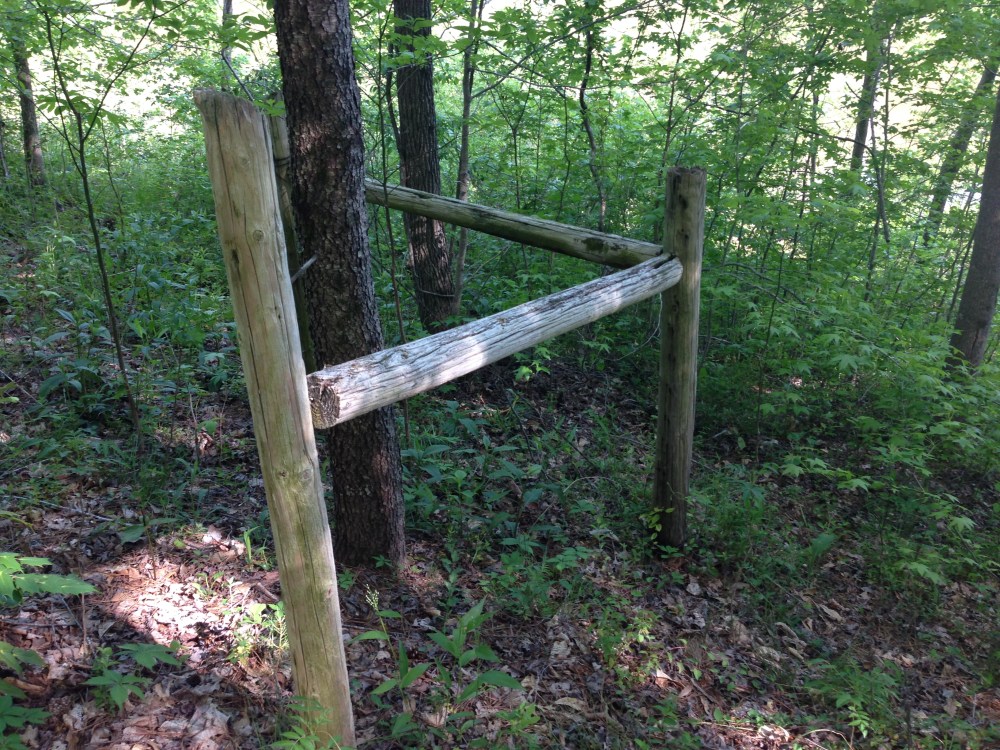
Vestiges of a Farm Fence
IMG_5506
Looking Skyward
IMG_5508
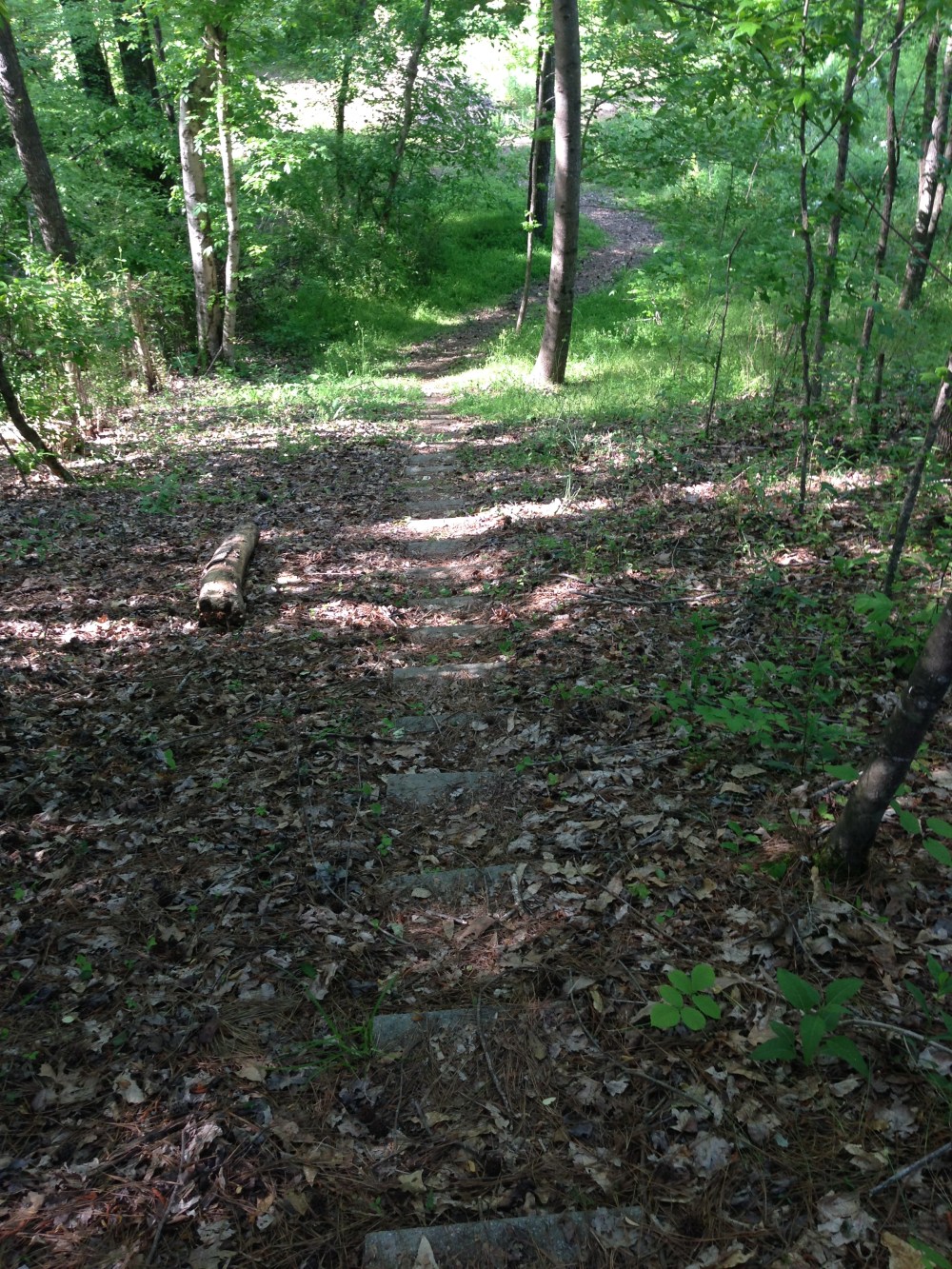
Woods Path
IMG_5503
Lakeside Path
IMG_5495
Wild Flower
IMG_5494
Waterside Blackberry Blossoms
IMG_5491
Chicken Creek
IMG_5486
Wisteria
IMG_5521
Water grass
IMG_5468
Azaleas

Tim Becker

Milton City Council

Council Member Hewitt Resigns. All the Best, Burt!

Hewitt

April 26, 2018

On Monday night, Council Member Burt Hewitt resigned from Milton City Council.  Hewitt and his family will soon be moving out of Milton.  Hewitt was my favorite member of the legacy city council.  His departure is a loss for the City.  I liked Hewitt for a number of reasons.

First and most importantly, Hewitt was not an opportunist.  That is, it never struck me that he was on Council to further his personal/business interests or to feed his ego.  I am convinced that 80+% of politicians are (mostly) opportunists.  They would embrace Nazism for a few extra votes or more applause; their principles are infinitely malleable.  Not so with Hewitt, who I think was able to largely separate his personal/business interests from his elected duties.  Hewitt clearly articulated the simple principles that motivated him, and he usually applied those principles to his voting.  Citizens usually had a pretty good idea about how Hewitt might vote on an issue.

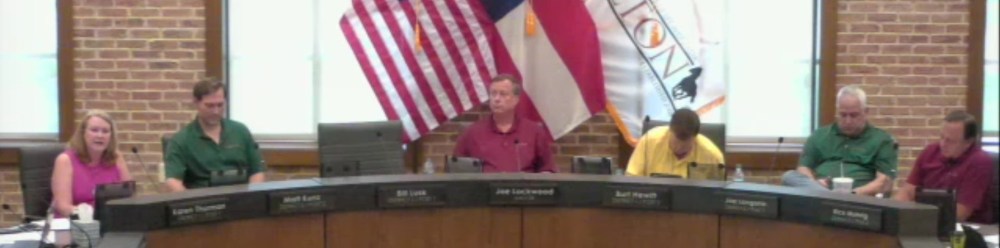
Milton City Council Wishing They Were Elsewhere

Hewitt also had a voting record that mostly aligned with the prerogatives of citizens.  He was on the right side of most issues.  This mostly spared him the ire of ordinary citizens.  He was not a lightning rod for controversy, although he did occasionally delight in swiping at a few local political nut-jobs.  And Hewitt did not suffer fools lightly.  You knew when Hewitt was annoyed with some of the Council nonsense that sometimes passes for governance in Milton.  He would fidget, look at the ceiling, twirl his pencil, and or engage in other diversions to channel his impatience with other Council Members that loved to hear themselves speak.

The special election for Hewitt’s District 1 seat will be held in November 2018.  The next scheduled election for this District 1 seat will be conducted in November 2019, so the candidate that wins the special election will have to stand for run for re-election at that time.  Hopefully, Milton will elect a District 1 council member not unlike Hewitt or our new Council members Bentley and Jamison, who are doing a terrific job representing citizens.

Farewell, Burt.  You will be missed.  I wish you continued success in all your endeavors.  And keep that twisted sense of humor in check.

Tim Becker

Good Governance, Milton City Council, Smart Land Use

Birmingham Crossroads Variance Denied: Utopia Lost?

Utopia Vs Dystopia

April 24, 2018

Last night, the Birmingham Crossroads variance was denied.  This was absolutely the right decision.  It was a victory for citizens.  I am quite sure that the variance would have been approved if citizens had not protested so loudly and had not shown up in numbers to express their opposition.

A false choice was presented last night between Utopian and Dystopian futures for the Southeast corner of Birmingham Crossroads . . . both futures conveniently created by the applicant. 

Utopia and Dystopia

The Utopian vision was the developer’s proposal to build a wonderland without a buffer.  His vision was colorized.  There were beautiful artist renderings–mostly in rich and verdant greens.  There was a quaint village feel . . . you could almost taste the front porch lemonade and see forest sprites peeking from behind the bushes and trees.

The Dystopian vision (of the parcel with a buffer) was drab . . . painted in black, grays, and white.  No beautiful artist renderings . . . just a sterile, two-dimensional site plan.  The buffer was merely a white rectangle . . . a featureless no man’s land.  No quaint village, but rather dreary proletarian housing.  This was the developer’s “threat plan” . . . what he asserts he will build if denied his variance.

The contrast was stark.  It might have hoodwinked some Council members, but citizens were not fooled for a second.  Grizzled veterans from previous zoning battles once again streamed into City Hall to let Council know unequivocally that we were not buying what Oak Hall was selling.  With some obvious reluctance (from some council members), Council sent the developer and his attorney packing.

The denial of the variance certainly cheered citizens.  However, the biggest victory was for good governance.  The rule of law in Milton was upheld.  The importance of this victory cannot be overstated.  You see, before the meeting, Mayor Lockwood has asserted “Average citizens does not care about process.  They only care about outcomes.”  He further asserts that process was only important to a very small group of citizens, like me, that follow city government.  I will never accept this notion.  Never.   Last night citizens strongly asserted that they do care about process . . . about the rule of law . . . about fairness . . . about transparency . . . about honesty . . . about competence.  These are all elements of a good process.  And I think citizens believe–at least instinctively–that a good process will lead to good outcomes.

Generally (but sometimes reluctantly) I have supported Mayor Lockwood.  However, I find Mayor Lockwood’s opinions about “average” citizens troubling and just plain wrong.  Of course, on any given issue, Mayor Lockwood has a more informed opinion than an “average” citizen, but that does not mean Mayor Lockwood is right about any particular issue.  And more importantly, I assert that the collective wisdom of citizens always trumps the wisdom of 7 council members.  Always. 

Mayor Lockwood protests that council members are not monkeys and that if it were so easy, a computer would make all of the decisions for the city.  What he is implying is that we expect elected officials to exercise judgment.  And I wholeheartedly agree with him.  However, that judgment must be exercised within the boundaries of the rule of law.  So yes, process, which includes adherence to the rule of law, is important.  In fact, process and the rule of law ensure that citizen prerogatives are protected and advanced, as it keeps politicians in check.  Process and rule of law devolve power to the people and away from politicians, much to the chagrin of most politicians.  So yes, we expect good judgment from elected officials, but also respect for the rule of law.

Last night’s denial of the variance also produced other victories for citizens.  Citizens once again faced down a developer who had been effective in his intimidation of Council.  A strong message was sent to developers that threats will not work in Milton and, in fact, might actually backfire on developers.

With the denial of the variance, Council also avoided setting a dangerous legal precedent–i.e. that buffers and setbacks are malleable.  Variance approval would have prompted other developers to demand equal treatment, and buffers and setbacks all over Milton would have been vulnerable.

Thanks

Thanks to citizens that showed up and spoke up at this hearing and the previous hearing, including Julie Bailey, Cleveland Slater, Bill Bailey, Joan Wunderle, Daniel Fernandez, David Damiani, Sharon Mays, Kurt Nolte, Vince Taylor, Joe Whitley, Tony Outeda, and Heather Creran.  Thanks also to Arnie Moore and Diane Maloney, who showed up to speak but were not permitted because of a technicality.  Thanks also to the many citizens that showed up to support the speakers.  Lastly, thanks to all of you that visit this blog.  Over the last 48 hours, the blog has logged nearly 900 visitors and over 1,100 hits.  Please consider subscribing to the blog to receive posts by email as they are published.  Informed and engaged citizens are key to good governance.

Advocating to clean, competent, courageous, and citizen-centric government,

Tim Becker

Good Governance, Milton City Council, Smart Land Use

Citizens, Please Stand Up for the Rule of Law at Tonight’s City Council Meeting

19f0c701ce4abc910b423c9c54b2a3a2

April 23, 2018

First, thank you for your outpouring of support.  In the last 24 hours, over 650 Milton citizens have come to the Milton Coalition blog for information.  There has also been an uptick in folks signing the Milton Coalition petitions for smart land use . . . 20 new signatures and counting.  And I know many of you have written letters to Council and have forwarded my call-to-action email to friends and neighbors.  Thank you.

Please consider coming to tonight’s meeting and speaking.  It is important for Council to hear directly from citizens at Council meetings, and it does make a difference.  Tonight’s council meeting begins at 6 pm and is at City Hall.  You will need to complete and turn in a speaker card, which takes only a minute.

Following are some insights on the tonight’s Crossroads variance hearing.

Outpouring of Citizen Opposition.

My understanding is that Council has received an onslaught of letters in opposition to tonight’s variance request.  So that means that Council will deny the request, right?  The answer is absolutely NOT.  In the past, I have heard various self-serving and ridiculous responses from Council members for disregarding citizen letters.  And I believe that right now a majority of council is leaning toward approving the variance.  Nevertheless, letters do matter, so keep sending them.  Every little bit counts.  And speaking at council matters even more and is critical to beating back this variance request.

It will be interesting to note if any Council Members even mention the overwhelming citizen opposition.  They certainly should.  The November 2017 election was predicated on “shifting power back to citizens.”  What does it say about our Council if they vote to approve the variance in the face of such strong citizen opposition?  Reference to citizen opposition is one (of many) indicators of how Council might vote . . . a positive indicator.

Legal Precedent

Several readers reminded me of the importance of legal precedence with this variance.  Legal precedence is one of the most important reasons for denying this request.  These sorts of decisions have a tendency to ripple throughout our community.  Entirely eliminating the buffer and setback is a really big deal.  Other developers will certainly demand equal treatment.  And of course, granting this variance would put developers in a better position to win future legal battles against citizens.   Think about that undeveloped land near you and the buffers and setback being reduced or even eliminated . . . 

Be aware that tonight a Council Member may ask the City Attorney if a variance approval will set a legal precedent.  This is a cynical ploy to tamp down citizen opposition.  The City Attorney always states that each zoning case stands alone and does not set precedent.  However, remember that the City Attorney’s job is to protect the City.  The City Attorney cannot be recorded to say that a zoning decision sets precedent, as that would hurt the City in future lawsuits.

Creative Math

In making these decisions, each Council member has to go through a calculus of sorts.  There are upsides and downsides.  Pros and cons.  However, in this case, even under the worst case scenario, I do not understand how any Council Member could vote for this variance.  So what is the worst case?  The developer builds 30 homes instead of 25 and the separation between houses goes from 10 feet to 0 feet.  So to get this result for citizens, what is the cost?  The downside?  The cons?  Well, since you asked . . .

  1. A loss of citizen confidence and trust in government, resulting from rejecting overwhelming citizen opposition.
  2. Encouragement of corruption and loss of confidence in government resulting from a disregard for the rule of law.  Variances require a finding a hardship.
  3. A dangerous legal precedent is established–i.e., buffers and setbacks can be more easily reduced or eliminated.
  4. Encouragement of other developers to threaten Council to bend the rules for their benefit.  In approving this variance, council would continue a long history of indulging developers that has resulted in vast amounts of staff and Council time being spent on ridiculous developer proposals.  This vicious cycle needs to be ended once and for all.  A line must be drawn in the sand.
  5. Loss of over 1 acre of greenspace at the same time the City is buying greenspace.  That makes absolutely no sense.
  6. A chance to create an even better development with a buffer.  Council is overlooking the possibility that the developer might actually come back with a better proposal that includes the buffer.

And remember that the worst case scenario is a threat and likely a bluff, as we have witnessed many times in the past.  Folks,  the bottom line is that the calculus for approval just does not pencil out.

Striking A Good Deal For Citizens?

Beware.  If it seems the variance is going to be approved, you will see conditions added to approval of the variance.  This is standard practice in these proceedings.  It is meant to make citizens and Council members feel better about the outcome.  However, the addition of conditions is mostly political theater and meant to provide cover for an unpopular vote.  You must understand that developers view these proceedings as a negotiation from Day 1.  Accordingly, they generally submit proposals that they know are prima facie unacceptable.  This creates negotiating “head room” while allowing Council to save face.  Additionally, over the past 2+ years, I have noticed that Council is a terrible negotiator.  (I say this as someone who has taught classes and written articles on negotiation.)  Council consistently makes rookie mistakes, like negotiating with themselves and laying all their cards on the table.  It can be painful to watch.  But make no mistake about it . . . approval of a variance with conditions would be the classic Pyrrhic victory.  Council needs to stand strong and deny this variance.

Please consider speaking at tonight’s council meeting.  Let’s once again face down developers that are seeking to bend and break our rules through coercing Council.  Let’s stand up for the rule of law.  Let’s make it clear to Council that citizens are in charge.  As always, thank you for your strong support for good governance in Milton.

Advocating For Smart Land Use,

Tim Becker

gg

Good Governance, Milton City Council, Smart Land Use

Birmingham Crossroads Variance Application: Rule of Law vs. Jungle Law

Wilbur and Rudy's

Gradually, I have concluded that the Birmingham Crossroads variance request for the SE corner is more important than any issue that has come before Council since I become involved in November 2015 . . . more important than even the CSO and the subsequent Ebenezer rezonings.  I say this because the Crossroads variance request concerns the essential role of City government.  It involves fundamental issues of rule of law and due process.  Council members must decide whether (or not) they take seriously their oath of office, which requires them to uphold the U.S. Constitution and the laws of Milton.  And this includes long-established laws and practices for granting variances.  Yes, it is that simple . . . and yes, it is that important.

oath of office

Some council members have asserted that citizens do not care about process—that is, how government works; rather they assert that citizens care only about outcomes.  Such sentiments are not only wrong; they are dangerous.  Essentially, such politicians are asserting that the ends justify the means.  If our city processes do not lead to the “right” outcomes (according to a subjective determination by these politicians), then it is fine (for City Council) to disregard or subvert government processes.  Of course, this is a recipe for chaos and manipulation.  And, in fact, we have witnessed such chaos and manipulation in Milton over the past few years.  Furthermore, this failure to respect the rule of law concentrates power in politicians, not the people.  Council meetings become cage matches or a Night at the Improv.  Every issue gets duked out at Council, with governance becoming essentially an exercise in subterfuge and improvisation.  And this disrespect for process has created an environment that allowed certain politicians—some still sitting on Council—to advance (mostly in the shadows) the interests of Special Interests (primarily developers).

The variance process is relatively straightforward.  It is intended for minor deviations from zoning laws.  The American Planning Association provides the following examples:  “a house will be a foot too close to a lot line or a few feet too tall, or the lot does not quite meet the minimum size for the zoning district, or a commercial business has one or two parking spaces fewer than the zoning ordinance requires.”  Entirely eliminating a 75-foot buffer (over an acre of greenspace) is not minor.  (Note:  It is disconcerting that Council would even consider reducing greenspace in Milton, given that 82% of voters approved the Greenspace Bond in 2016.  It is also worth noting that this is the second reduction in greenspace at the Crossroads, as Council previously approved a reduction of the village green in the Publix shopping center to allow construction of an interior roadway and additional parking.)

The standards for variances have not changed in 100 years and are unambiguous.  An applicant must prove that enforcement of zoning regulations would cause “undue hardship” to the applicant.  In the Crossroads case, the applicable zoning regulation is a requirement for a 75-foot wide buffer (and additional 10 foot setback) between the mixed use parcel and the AG-1 parcel that comprise the proposed development.  In its recommendation for denial of the variance, city staff made a compelling case that the required buffer does not represent a hardship in developing the property.  Furthermore, the applicant’s attorney even admitted that the buffer did not represent a hardship in developing the property.  You read that correctly . . . even the applicant admits to no hardship.  Confusing, huh?  So Council determined on its own that there was a hardship?  No, the truth is that Council did not even consider, even for a moment, the central and dispositive question of hardship.  The word “hardship” was never uttered.  Staff’s analysis of hardship was never considered . . . or even acknowledged.  The comments of several citizens similarly fell on deaf ears.  There was a total lack of any sort of process . . . not even a nod to good governance.  No rule of law, but rather Milton’s version of jungle law.

So what did Council discuss instead (of hardship) and why did Council eventually defer the matter of the variance?  Well, the applicant’s zoning attorney threatened that if the variance was denied, the developer would cram town homes onto the site . . . adding “and it won’t look pretty.”  So Council reprimanded him for making threats, right?  WRONG.  No one on council uttered a peep in defense of the citizens.  Rather, Council engaged a long and convoluted discussion of hypotheticals about what might get built if the variance is denied.  The applicant baited Council with his threats and Council eagerly took the bait.  Council proceeded to air Milton’s legal dirty laundry before an applicant that has threatened to sue the City if the variance is not approved.  Council sure gave him plenty of good material for his lawsuit.  Council asked staff for its opinion of what might get built and heard several and conflicting answers to this question.  Mayor Lockwood, who is responsible for the running of Council meetings, allowed yet another Council meeting spiral out of control . . . reminiscent of the first Ebenezer hearing.  Council eventually realized it had entered a legal quagmire and voted to defer its decision on the variance.  However, by this time, the damage had already been done.  It was a sorry display.  Most importantly, the issue of what might get built, while interesting, is not relevant in adjudication of a variance application . . . period.

Are you getting the picture?  A complete and utter lack of process resulted in a long and painful hearing that damaged the City’s future legal position in this matter, with Council opting to kick the can down the road.

Had Council followed good governance processes, Council deliberations would have lasted less than 5 minutes.  Here is how council’s last hearing should have gone down.  Council Member asks “Is there a hardship?”  No says staff.  And even the applicant admits this fact . . . no hardship, no variance . . . . motion for denial . . . denial approved.  Case closed.  (BTW, some citizens have been discussing suing the City; I cannot imagine a court upholding a variance approval without a finding of hardship.)

Bluffing

So putting aside the issue of process, should citizens be concerned about what might get built at the Crossroads?  I do not think so.  Ultimately, what the developer will build if the variance is denied is unknown and unknowable.  Currently, Oak Hall is seeking eliminate the buffer and build 25 single family detached (with only 10 feet of separation) homes.  If the variance is denied, the builder has asserted that he will build 30 townhomes and has submitted a drawing that some Council members are calling the “threat plan.”  However, threatening to build higher density and/or ugly houses is a common tactic, but usually a bluff.  Remember the Ebenezer rezoning when the developer submitted a plan for 48 homes on 65 acres; he also threatened to drain the pond and cram in 55 homes.  However, he is currently building 21 homes on (the most attractive) 38 acres; it is doubtful that the remaining 27 acres will support more than an additional 9 homes, for a total of 30 homes (vs. the threatened 48 homes).  We’ve seen the “idle threat” tactic also used with the Reserve at Providence and the Hamby Road sewer extension.

What actually gets built is ultimately a function of marketability, financing, and other factors—many known only to the developer.  So comparing the current application to some hypothetical “threat plan” is a false choice, reminiscent of the dishonest assertion that the development across from CHS was a choice between a church and 27 townhome units (when, in fact, the land was zoned AG-1 and should have been built out as an AG-1 development for a maximum of 8 homes).  And is there really much of a difference between townhomes and detached homes separated by 10 feet?  Both will look out-of-place at the Crossroads.  And wouldn’t it be better to shield whatever gets built with a tree buffer?  The point is that whatever gets built will likely not be appreciably worse than what is currently proposed . . . and it might actually look better provided that we don’t cave to the developer’s threats.  And a buffer will ensure that anything unsightly will be mostly hidden from view.  Council needs to call the developer’s bluff and send him packing.  (BTW, Oak Hall is the same developer that obtained rezoning and variances for the first high density “conservation” subdivision in Woodstock and then promptly flipped the property to Pulte, which built exactly the sort of development that you would expect from Pulte.)

the-rule-of-law-web

I urge citizens to write to their City Council members.  Demand that they uphold the rule of law and deny this variance.  Please also consider attending Monday’s Council meeting to demand that Council do their darn job, stand up for citizens, and stop indulging the threats of developers.  Your voice matters and needs to be heard loud and clear.  It is time that Council draw a firm line in the sand and stop these nonsense applications for zoning changes that consume vast amounts of staff and Council time . . . time better spent on adopting good governance practices and processes that will achieve better outcomes for citizens.

Lastly, I am not naive to the fact that bad process resulted in the bad outcomes that Council is dealing with.  Legacy members of Council bear some responsibility for the difficult issues at the Crossroads.  However, the solution is NOT to continue to apply bad process to correct these past bad outcomes.  Such an approach only perpetuates the cycle of poor decision-making and leads to even worse outcomes.  The solution is to follow the process wherever it takes us.  And if we believe the outcome is suboptimal, then we need to fix the process.  That is how the rule of law works.  If you don’t like the law and its outcomes, then you change the law.  You don’t subvert or manipulate the process to achieve outcomes.  That model ultimately plays into the hands of developers, who have much more time, resources, and expertise to manipulate a bad process.  Council members that don’t understand or believe this are naive . . . and I suspect are being played by other Council members with strong ties to the development industry.

Advocating For The Rule of Law,

Tim Becker

Calvin

Smart Land Use

Birmingham Crossroads: Developer’s Case for Variance Approval Is Absurd

Wilbur and Rudy's

March 19, 2018

Following is a (slightly) modified letter that I sent to Council regarding a request for a variance to entirely eliminate the required 75-foot buffer between 2 properties that Oak Hall Companies is seeking to develop at the Southeast corner of the Birmingham Crossroads.  It is just one more example (as if we needed another) of Special Interests coming to Council to fix their mistakes.  I am convinced that developers have become so accustomed to getting such relief from Council that they forgo all but the most basic due diligence.  It is a classic case of moral hazard (i.e., lack of incentive to guard against risk where one is protected from its consequences).  Please consider attending tonight and speaking against granting this variance.  It should be interesting to see if any Council Members fall for the developer’s cock-and-bull case for approval.

**********************************************************************************

City Council:

I am writing to urge you to vote against the variance (to eliminate the buffer) being sought for Birmingham Crossroads.  I have spent considerable time studying this issue.  I believe that tonight’s vote is a key test of whether Council truly understands the results of the 2017 elections (or whether we are back to business as usual in Milton).

This variance request is a relatively simple matter.  Once again (as with the recent Cambridge, Ebenezer, and multiple Hopewell rezonings), a developer is coming to Council asking that the rules be broken so he can increase his profits.  Once again, a developer is asking for more density than he is allowed under existing zoning laws.  Once again, a developer has not done his due diligence before buying a property and now is coming to Council to fix his mistakes.  This is a zero sum game.  The developer increases his profits and citizens pay the cost in terms of increased traffic, more crowded schools and amenities, and lowered property values.  It is crony “capitalism”:  concentrated benefits for special interests that get socialized across Milton’s hapless citizens.

The developer is arguing that both Fulton County and Milton approved site plans that do not include the 75-foot buffer between the north and south parcels, that approval of the site plans was tacit approval of the proposed variance, and that subject variance request is a mere formality.  This argument is laughable.  The developer conveniently does not mention that a condition of approval for the previous rezonings was that all applicable zoning laws must be followed.  Furthermore, our zoning laws state that rezoning site plans are subject to modification to bring them into conformance with our zoning laws.  That is, our zoning laws supersede rezoning site plans.  (The American Planning Association supports this contention; see below discussion.)

My understanding is that the developer submitted a new “improved” site plan on Friday afternoon.  Council, as you know, late submission of documentation is an often-used (and dishonest) tactic of developers.  We saw it most recently with the Hamby Road sewer extension.  We saw it with the Ebenezer Road and Hopewell rezonings.  Submitting a plan (or other documentation) at the last minute is unfair to our staff, but, more importantly, it is unfair to citizens.  It is an abuse of our process.  A zoning hearing is a quasi-judicial proceeding, meaning that it follows “courtlike” protocols.  A fundamental legal protocol is discovery.  Submission of a plan so late that citizens do not have a reasonable opportunity to analyze the plan denies citizens due process.  It is unconstitutional according to both the Georgia and U.S. Constitutions.  The developer has owned this land for 2 years.  He has had plenty of time to submit a compliant plan well in advance of this proceeding.  Furthermore, the developer has threatened that he will cram 33 townhouses on this property if his variance is not approved.   Denying citizens the opportunity to review a developer’s site plan is reason enough to deny this request for a variance.  Threats from a developer are reason enough to deny this request.  These actions demonstrate that the developer is not acting in good faith.  Dishonest tactics and veiled threats should not be rewarded by this Council.

I would also remind Council that staff has recommended denial.  I would assume that staff is confident that they would prevail in any lawsuit filed by the developer, who has threatened that he will sue if not granted a variance.  I assume that case law is on our side.

I would also remind Council about the purpose and process for variances.  According to the American Planning Association (APA), variances are meant for minor discrepancies, such as “a house will be one foot too close to a lot line or a few feet too tall . . . or a commercial business has one or two parking spaces fewer than the zoning ordinance allows.”  In this case, the developer is not addressing a minor discrepancy; the developer is essentially requesting a major deviation from our zoning laws—laws that he should have consulted before buying the subject properties.  Furthermore, the applicant is required 1) to show “undue hardship”, (2) the hardship is “caused by the size and shape or the property or some other factor that the applicant (or his or her predecessor) did not cause, (3) approving the variance “would not create significant negative impacts on the surrounding area.”  In this case, the developer does not remotely satisfy even one of the three criteria.  The APA states “buying a property without knowledge of zoning restrictions is also not ‘undue hardship’ because that could have been prevented by the applicant’s checking the zoning before the purchase.”  So the developer’s lack of due diligence is not considered a hardship and at the CZIM the developer did not claim any other hardship.  The APPA further states that “while consistency with the adopted plans is sometimes a criterion for variance approval, often it is not.”  This means that zoning laws generally supersede site plans.  So it is clear to me that the developer is abusing our variance process.  It is clear that there is no hardship, just incompetence.  And it is clear that our zoning laws, not the rezoning site plan, govern this matter.

I have often heard Council cite local control and preferences as critical to its decision-making.  For example, local control was the main reason cited for abandoning the roads in Crooked Creek.  It is clear that citizens that live near the Crossroads want denial of this variance request.  Some will speak tonight.  Many years ago, the Birmingham Hopewell Alliance worked hard to ensure that a master plan was approved by all parties that would ensure the Crossroads was developed to a high standard.  I hope that tonight you will respect and honor the work of the BHA and deny this request.

So given that this developer cannot make a decent case for approval of this variance, why did he nevertheless apply for a variance?  The reason is that Milton has a long history of granting developers whatever they want, only to leave citizens holding the bag.  The result has been a steady stream of ridiculous requests from developers that has kept Council preoccupied priorities of developers rather than the priorities of citizens.  Fortunately, we recently had an election that (once again) clarified the desires of citizens.  The 2017 election confirmed citizens’ sentiments as expressed in multiple city surveys, citizen petitions, and the overwhelming passage of the greenspace bond.  Citizens have been very clear that we want our zoning laws upheld.  That is not too much to ask.  In fact, upholding our zoning laws is your duty and obligation as our elected representatives.  Please deny this variance request.

Thank you for considering my perspectives.  Please feel free to call me to discuss.

Respectfully,

Tim Becker

shutterstock_363192542-700x467

Good Governance, Milton City Council

State of the City: Mayor Gives Credit Where It Belongs . . . To Citizens

State of City

March 6, 2018

Last week, Mayor Joe Lockwood delivered a “State of the City” speech.  The speech was preceded by a nice cocktail hour, paid for by the Chamber of Commerce and catered by local vendors (including Cheeses and Mary).  The Mayor spoke to a packed City Council Chamber.  He was followed in his remarks by short updates from each of the city’s department heads.  The City Manager, Steve Krokoff, gave introductory and closing remarks.  It was quite a nice event.

The State of the City event was powerfully symbolic of positive changes that have occurred in the City over the past 2+ years.  This change has been steady and substantive.  As with all “State of . . . ” speeches, the mayor recited the positive achievements of the City and painted an uplifting vision for the future.  Mayor Lockwood acknowledged the contributions of the City Council (including former council members), city staff, and county/state officials.  However, Mayor Lockwood reserved the most credit for the city’s success to citizens, where it rightfully belongs.  This was condign acknowledgment of the role citizens have played in the progress of the City.  The Mayor’s remarks highlighted the exceptionalism of Milton, owing to the specialness of its citizens.  However, Mayor Lockwood went even further with his remarks.  Mayor Lockwood not only acknowledged Milton’s citizens, he challenged Milton’s citizens to engage in our city government.  And “challenge” was the perfect word, as it demonstrates our new city council’s recognition that good governance is directly correlated with citizen engagement.  Our founding fathers were acutely aware of this correlation.  They understood that consent of the governed meant much more than free and fair elections; they knew that good governance required active participation of citizens.

I especially liked that Mayor Lockwood was specific in his challenge, recommending 9 actions to citizens:

  1. Attend a city council meeting.
  2. Reach out to council members.
  3. Participate in a community planning event (e.g., a Community Zoning Information Meeting).
  4. Respond to a community survey.
  5. Follow local government on social media and post a comment.
  6. Sign up to participate in the citizens’ government academy.
  7. Visit a fire station.
  8. Chat with a Milton police officer.
  9. Attend one of the City’s special events.

Mayor Lockwood also asked for a show of hands from citizens that were at the new City Hall for the first time.  It was refreshing to see a few dozen raised hands, evidence of new faces and voices in our city government.

SOC Audience

Mayor Lockwood’s speech was indicative of recent positive changes in our city government.   The speech was a clear signal that citizens will not only be heard and respected by our local government, but citizens will be proactively engaged in local governance.  This emphasis on citizens is evident in our new council, whose proceedings are marked by professionalism and integrity.  I believe that a new day is dawning in Milton’s governance . . . governance recognizing that our great citizens can make Milton America’s greatest small city . . . but only if we proactively engage those citizens.

Advocating For Citizens,

Tim Becker

Smart Land Use

Key Question For Birmingham Crossroads Developer: What Benefit Will Requested Variances Provide to Citizens?

February 26, 2018

An important Community Zoning Information Meeting (CZIM) is being held at Community Place (right next to City Hall) at 7 pm on Tuesday, February 27th.  This CZIM concerns the development of the southeast quadrant of Birmingham Crossroads.  The developer is seeking 2 zoning modifications with 2 concurrent variances.  This means that the developer is seeking waivers for 2 of our zoning rules.  Such zoning requests almost always involve a developer seeking higher density than existing zoning rules allow and thus improving the profitability of his project.  In this case, the developer is seeking relief from two zoning rules:

  1. The Birmingham Crossroads master plan requires that the village green be 13,000 square feet.  The developer wants to reduce its size by 900 feet to 12,100 feet.
  2. The developer’s project combines land that is within the footprint of the Birmingham master plan with land that is outside of (and to the south of) the master plan footprint (and zoned AG-1).  The builder is requesting to entirely eliminate the required 75-foot buffer between these 2 parcels.

Generally, I am opposed to any waivers to our zoning code, unless they result in a clear and demonstrable benefit to the public, evidenced by strong public support for such variances.  I have read the developer’s proposal and it does not provide any discussion of such public benefit.  Rather, the developer claims that the current zoning represents a financial hardship that is preventing him from developing his properties.  At the CZIM, the developer should explain why the zoning modifications will benefit the public.  That is, how will the modifications result in a better development for the community (and not just increased profits for his company)?

Some background might be useful in understanding this request.

  • Many years ago, commercial developers submitted proposals for developing Birmingham Crossroads.  Nearby residents organized to fight what they believed were proposals to over-commercialize the Crossroads community, which was then in unincorporated North Fulton County.  Leading the resistance was the Birmingham-Hopewell Alliance.  A compromise was eventually reached creating a master plan that confined commercial/high density development to a 27-acre footprint.  Included were a number of stipulations (e.g., village greens) that were intended to ensure the development would respect the rural character of the surrounding area.
  • In 2014, a rezoning was approved that eliminated a 10,000 square foot daycare facility and allowed a combination of detached single family homes and town homes (vs. just town homes).
  • A rezoning by the current developer was requested in 2016.  That rezoning would have eliminated most of the commercial square footage.  All of the required commercial space along Birmingham Highway would have been replaced with townhouses.  A number of nearby residents, myself included, opposed the rezoning, which was denied 6-1 (with only Mayor Lockwood voting to approve).
  • A zoning modification for the Publix shopping center was approved (4-3) in 2017 that eliminated some of the village green to allow construction of an interior road and additional parking spots.  A number of residents spoke, myself included, spoke against approval.
  • In January 2018, the Design Review Board approved demolition of existing structures in the southeast quadrant in anticipation of the property being developed.

I am keeping an open mind about the developer’s proposal.  However, I am not buying his hardship argument.  I believe he can profitably develop the parcel, without the variances.  Accordingly, the developer will need to make a case that the requested variances allow him to build a better development that will demonstrably benefit the community.  Otherwise, he should abide by the current zoning regulations.

Tim Becker

Former Councilman Bill Lusk, Milton City Council, Smart Land Use

Hamby Sewer Extension Denied! Another Win For the Community!

Sewer Creep

February 22, 2018

Last night, citizens witnessed the first tangible benefits of the new composition of Council resulting from the addition of Laura Bentley and Peyton Jamison.  The extension of sewer on the south side of Hamby Road was denied.  I am quite sure that this extension would have been approved in December–before Bentley and Jamison were elected to Council.  Bentley made the motion to deny; Jamison seconded the motion.   Council denied the extension.  It was a beautiful moment for citizens.

I believe the sewer extension would have been approved in December under the previous council.  And in fact, Laura Bentley’s opponent in the election, Mr. Bill Lusk, was lobbying for approval of this sewer extension, even before the facts were known.  Last night’s vote was 6-0, but don’t be fooled by that.  I believe both Councilmen Kunz and Mohrig would have voted for this sewer extension in December.  I base this opinion on their previous voting records, their questions and comments last night, and my experience with both council members.  And Kunz’s video (discussed below) provides clues to his true views on this matter.  Having said that, I think any rational person, perhaps including Mr. Kunz and Mohrig, would have had a difficult time voting for this extension, considering that citizens and City staff blew gaping holes in the developer’s plan last night.

Three of us spoke last night in opposition to the sewer extension.  Thanks to Cleveland Slater and Julie Bailey for their impassioned and fact-driven arguments.  We are truly blessed to have citizens that invest copious amounts of time to understand these complex issues and advocate for their fellow citizens.  Both Cleveland and Julie do so motivated by nothing more than a love for their community.  Following are videos of both citizens.  (I am intentionally leaving out my video as I cannot hold a candle to these two.)

By the way, it takes a lot of courage to address Council.  A lunatic fringe in Milton, supported by current (Kunz) and former council members, have used various bullying tactics to abridge the exercise of basic political freedoms in Milton . . . but alas, to no avail.

Warning!  The Hamby Road sewer issue is not fully resolved.  Council only denied the request to extend sewer to the portion of the Hamby Road development where the developer acknowledged he did not have a right to sewer.  The issue of whether he is entitled to sewer on the 18-acre parcel that is/was part of the Manor must still be decided.  The City Attorney is currently analyzing this issue.  However, it should be noted that our same City Attorney advised Council 10 years ago when Council passed a motion to ban sewer in all unplatted areas of the Manor.

Now to Councilman Kunz’s video.

Kunz’s video demonstrates that Mr. Kunz either lacks a basic command of the facts or else he is showing his long-held bias towards sewer . . . or probably both.  Mr. Kunz contends that sewer is “already allowed” in one area (18 acres) south of Hamby.  This is 100% false.  Whether sewer is “already allowed” is the question that the City Attorney is researching and the question the City (perhaps Council) must ultimately answer.  Later Kunz actually refers to this 18-acre area as “sewered.”  Again, this is 100% false.  No part of the south area of Hamby is sewered.  NONE.  Period.

Mr. Kunz justified his no vote by stating that he was “confused” about the issue.  And he characterizes staff’s objections to the developer’s site plan as “questions.”  This is a disingenuous description of staff’s comments, which were generally definitive and specific.  Staff was clear that the developer’s 10-lot and 8-lot proposals were higher density than existing zoning laws would allow.  My sense is that the developer could legally only build 5 homes on the site, so half the number of homes he claimed were possible.  Furthermore, the marketability of some of these lots/homes would be questionable.  (BTW, I applaud Mr. Kunz’s for publishing these post-Council wrap-up videos, but he has an obligation to not misstate the basic facts, especially in his position as an elected official.)

Lusk PhotoLastly, former Councilman Bill Lusk was a no-show at last night’s council meeting.  Mr. Lusk’s opinion is that Milton’s development should be “left to the professionals.”  Because of their professional degrees, licenses, and certifications, Mr. Lusk believes these so-called professionals are beyond reproach.  Well, last night, we saw a “professionally prepared” site plan (once again) thoroughly discredited by a few lowly citizens.  And we saw a new city council that expertly sorted through the issues, squarely deciding in favor of citizens and against reckless development . . . proof that elections matter.

Tim Becker

Former Councilman Bill Lusk, Smart Land Use

Sewer Creep To The South Side of Hamby Road?

Sewer

February 20, 2018

Tomorrow (Wednesday) night, City Council will consider extension of sewer to the south side of Hamby Road.  As many readers know, extension of sewer has been a contentious issue in Milton.  All sitting Council members have vowed at one time or another not to extend sewer.  And yet sewer has been extended 4 times in the last 4 years, most recently with the approval of a rezoning on Hopewell Road just south of the Vickery Crest subdivision.

Milton’s sewer map governs where sewer can and cannot go.  There should be no exceptions made.  The confinement of sewer to a small area of Milton has spared Milton the uncontrolled, high density development that we observe in neighboring cities.  Milton’s lower density development is a key driver of Milton’s rural character and charm.  Please consider attending tomorrow night’s City Council meeting and speaking against the extension of sewer in Milton.  Following is a letter that I sent to City Council  this afternoon that provides a more in-depth perspective on this Hamby Road sewer extension.

Following is a link to a previous blog post on sewer creep in Milton:

Sewer Creep = Higher Density = Higher Developer Profits

Thanks for your continuing engagement on civic matters in Milton.  Your voice matters!

**********************************************************************************

Dear Mayor and City Council:

I am writing to express my concerns about the extension of sewer to the south side of Hamby Road.  This issue needs to be divided into two parts:

  1. Extension of sewer to lots that are wholly within the footprint of original Manor parcel.
  2. Extension of sewer to lots that are partly or wholly outside of the footprint of the original Manor parcel.

With regards to the first part of this issue, in 2008, our City Council was quite clear in its decision not to allow extension of sewer to the south side of Hamby:

Sewer service shall be prohibited for any new lots that are platted or acquired as a part of an expansion of the Manor subdivision within the City of Milton occurring after the date this motion is approved.

Accordingly, the only question that must be answered is whether there are other decisions, agreements, etc. that conflict with this City Council decision.  And if they conflict with the 2008 decision, do they supersede the 2008 Council decision?  This requires an opinion from our City Attorney, who (I assume) advised the City in 2008 and (I assume) would have steered Council away from a decision that was superseded by other agreements.

(As a side note, I am not completely comfortable with Jarrard and Davis advising the City of Milton on this issue.  Jarrard and Davis’s representation of both Forsyth County and Milton represents a real and substantive conflict of interest.  And it is this substantive conflict of interest that originally prompted us to seek outside counsel in this matter.  I have supported previous waivers of conflict of interest for J&D because the waivers involved relatively minor matters and the described conflicts of interest struck me as tenuous.)

With regards to the second part of this issue (extending sewer to lots partly or wholly outside of the footprint of the original Manor parcel), no legal issues are involved; extension of sewer would be purely at the discretion of Council.  Council should deny this request for any or all of the following reasons:

  • Citizens have been very clear in their opposition to any and all extensions of sewer.  Over 1900 voters signed a petition against such extensions, pledging to vote against any City Council member that votes for such extensions.  This citizen opposition has been expressed in countless letters to Council and comments before Council.  In the most recent election, the anti-sewer candidate garnered 71+% of the vote against her pro-sewer opponent.
  • Higher density housing and further sewer extension inevitably follow in the wake of these decisions to extend sewer.
  • Each extension of sewer sets a precedent for further sewer extension.  The four sewer extensions that have been approved over the past 4 years have weakened the city’s position in future lawsuits that might filed against the City by developers.
  • The Manor sewer system has a checkered past—both technically and financially.  Why would we allow it to service any more homes?  The Manor sewer’s issues prompted Forsyth County to assume ownership and operation of the system.  The former HOA manager of this system has testified before Council to the many technical issues he experienced.  Forsyth County has banned such private sewer systems, partly citing technical issues.  In a May 2017 incident, over 9000 gallons of raw sewage were released from the Manor sewer system into Chicken Creek, causing issues downstream (e.g., algae blooms in King Lake).
  • My opinion is that this request for sewer is little more than a profit maximization scheme.  The developer clearly has purchased (at a significant discount) a clearly marginal tract of land with many restrictions placed upon it—token recompense for the many sins committed in the development of the Manor.  He is now coming to Council with a scheme to mitigate those restrictions and thereby increase his profits.

Thank you for considering my perspectives.

Respectfully,

Tim Becker

Postscript:  Former City Councilman Bill Lusk has been lobbying City Council to approve the Hamby Road sewer extension.  Mr. Lusk (along with current Councilman Matt Kunz) voted for every previous sewer extension (and also every residential rezoning to higher density that has passed in Council).  Mr. Lusk’s overwhelming defeat in the 2017 election is already paying dividends to the citizens of Milton.

Lusk Photo