
June 17, 2018
Citizens, below is an email that I sent to Council requesting denial of the use permit and 9 concurrent variances to allow a music venue at Birmingham Crossroads. As readers know, I thoroughly study local city government issues. I am motivated by nothing more than a love of our community. This is an important issue that has much broader implications for our community. Please write to Council to request denial. If you live close to the Crossroads, let your Council Member know the distance of your home from the Crossroads. Also ask that you letter be included in the public record. Following are email addresses of the Council members:
joe.lockwood@cityofmiltonga.us,laura.bentley@cityofmiltonga.us,matt.kunz@cityofmiltonga.us,peyton.jamison@cityofmiltonga.us,joe.longoria@cityofmiltonga.us,rick.mohrig@cityofmiltonga.us
Following are the email addresses of the City Manager, City Attorney, and City Clerk. Please copy them on your email.
Dear Mayor and City Council:
(I am copying the City Attorney, City Manager, and City Clerk)
I am writing to request denial of the use permit and 9 concurrent variances for a music venue at the northwest corner of Birmingham Crossroads. I live only 1.5 miles from the Crossroads and drive through it nearly every day. I request that this letter be included in the public record.
I attended the CZIM and Planning Commission meetings. I also met for over 2 hours with the applicant and exchanged many emails with him. So far, I have met with 3 Council members and the City Manager about this issue.
Initially, I was strongly supportive of the music venue proposal. I even posted a qualified endorsement at my blog. At the Planning Commission hearing, I spoke in support of the application. However, as more details were provided, and I delved into those details, I realized that such a music venue would be harmful to our community. Many citizens—some of whom have never engaged in local government—contacted me to express their concerns and educate me on the issues. I also reviewed staff’s analysis, which was not provided until the PC meeting, and I was taken aback by some staff recommendations and lack of due diligence on some issues—for example, the noise analysis. I also became aware of several procedural issues that I believe have so compromised the process that a just outcome is unlikely.
Following are my objections to the proposed music venue.
1. Noise Variance. The current standard for festivals is 60 db continuous and 75 db peak. Staff is arguing that such a standard cannot be met and therefore a hardship exists that requires another standard to be applied. (This is incorrect; read below.) Staff’s recommended standard is 85 db. Let me be very clear. An 85 db standard would seriously degrade the quality of life in quiet AG-1 residential areas of Milton. Some have dismissed my reference to a freight train travelling at 45 mph 100 feet from one’s property line. However, that is legitimate reference point. Please google 85 decibels . . . all of the references are unpleasant. Why? Because 85 db is loud. My electric leaf blower at 3 feet puts out 85 decibels. No citizens living in AG-1 residential areas should be subjected to 85 db at their property line. And please google 60 db. Nearly all references note that 60 db is the level of a normal conversation. And I would remind you that horses, cats, and dogs have much keener hearing than humans (and of course, less ability to rationally process sound) that make such loudness more irritating, and sometimes even tortuous. Birmingham Crossroads is an equestrian area of Milton, not downtown Crabapple. Why would we subject nearby horses to such noise?
The staff-recommended commercial standard of 85 db was intended for Deerfield, Highway 9, and Crabapple, commercial areas where one might reasonably assert that loud music is acceptable. However, applying an 85 db standard to use permits in AG-1 residential areas of Milton is just plain wrong. And I would remind Council that current use permits in AG1 residential areas (e.g., for 2 special events facilities) hew to a standard of 60 – 65 db, which is reasonable. 85 decibels is 5 times louder than 60 decibels, so staff’s proposed standard represents a drastic increase in loudness. Such a standard could create mayhem in AG1 residential areas. Think carefully about a 5 times increase in loudness. Such an increase is analogous to increasing the speed limit from 45 mph to 225 mph (assuming cars could travel that fast) and not expecting (dramatically) more accidents.
Staff’s argument for hardship is plain wrong. Staff did not participate in, nor set any standards for, the noise testing and analysis. Staff did not take any of their own readings at the proposed site. The applicant simply self-reported the readings and measurement locations of his choosing. These readings were not provided in any signed report from an independent sound engineer. And in fact, the applicant reported that continuous and peak db were both 75 db at the closest property line (50 feet away). This is an impossibility, as continuous and peak db cannot be the same value for music, which varies significantly in loudness over time (and from song to song). And it begs the question about whether other readings were incorrectly reported or withheld. I would also point out that no ambient (without music) readings were provided at the nearest property line. Instead, ambient readings were taken far (more than 360 feet) from the proposed sound stage where the applicant admits they were contaminated by road noise. These readings were all > 60 db, supporting staff’s argument for hardship . . . that a 60 db standard cannot be met. However, a critical ambient reading—and the only one that matters–is the ambient reading at the closest property line, which is far from Hickory Flat Road and road noise. I hiked to an area in Birmingham Park that is near the closest property line. My readings were in the mid-40s, proving that the 60 db standard can be met and therefore no hardship exists. As a (former) nuclear submarine officer, I was trained in acoustics. And I can tell you that there is a right and wrong way to conduct sound analysis. And I can tell you that the sound analysis in this case was done the wrong way.
2. Buffers and Setbacks. A 75-foot buffer and 10-foot setback are required by the Rural Milton Overlay (RMO), which covers most of Milton. The applicant has proposed to eliminate all undisturbed buffers and setbacks. He is proposing to replace the buffer and setback along the McCurry’s property line with a 10-foot landscape strip. However, he is requesting to entirely eliminate the buffers and setbacks along all other property lines, including the boundary with Birmingham Park. This is perplexing as some of these buffers are far removed from (and north of) the proposed music venue. Furthermore, staff includes no hardship rationale whatsoever for the elimination of these other buffers. ZERO justification. Accordingly, in the absence of any hardship rationale, the variance for these buffers should be denied.
I am particularly concerned about the approval of this variance, as buffers and setbacks are required as part of the Rural Milton Overlay, which covers most of Milton. To allow such wholesale elimination of buffers would set a very dangerous legal precedent.
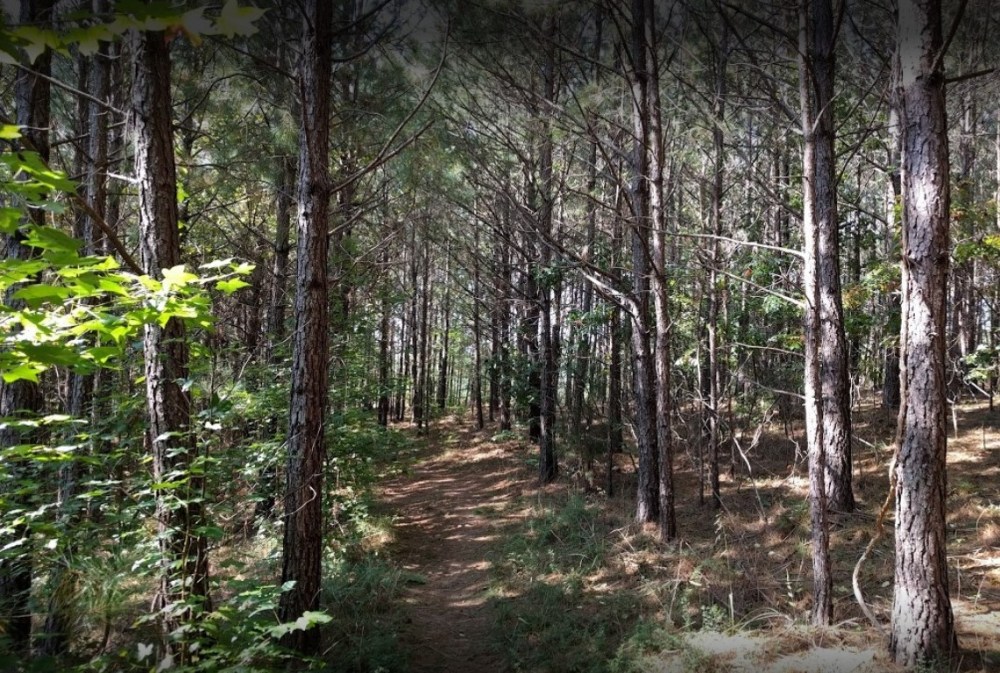
3. Protecting Birmingham Park. The proposed venue abuts Birmingham Park, a wonderful 200+ acre passive park that is enjoyed by hikers, walkers, and equestrians. It is truly a treasure. To locate such a heavy commercial use, a music venue, at the border of Birmingham Park is sacrilege. And to add insult to injury, the applicant is seeking total elimination of the undisturbed buffers and setbacks on his land that borders the park. That means he can clear-cut and bush-hog all the way to the boundary line. ZERO buffer. And clear-cutting does seem to be the applicant’s intent as a septic field is drawn on the site plan in an area that borders the park. More greenspace lost to the chainsaw. (Note: The applicant sits on the Greenspace Committee.) The undisturbed buffers are needed to protect the views in the park and to buffer the park from outside noise . . . like nearby concerts. Protecting Birmingham Park, a critical community asset, from noise and preserving the buffers is a FIDUCIARY responsibility of City Council. Allowing such a heavy commercial use will certainly be used to justify other encroachments on our beloved Birmingham Park.
4. Local Node and Local Control. Birmingham Crossroads was never meant to be a “destination,” like Crabapple, Deerfield, and Highway 9. Rather, Birmingham Crossroads was intended as a “local node” to serve the needs of nearby residents. And given the terrible and worsening traffic congestion, this “local node” function is increasingly important to nearby residents. It is already the case that local residents dare not leave their homes to go the Publix shopping center during morning or afternoon rush hours. From my home 1.5 miles away, it can take me 15 – 20 minutes to reach the Crossroads at certain times of the day.
Observing City Council over the past few years, I have discerned that an important principle in zoning matters is deference to nearby residents. I have heard the term “local control” used many times. Local control was the primary reason cited for the abandonment of the roads in Crooked Creek that allowed the gating of that subdivision. Well, those of us that live near the Crossroads demand equal treatment . . . the application of the principle of local control to our area. And it has become increasingly clear to me that a large majority of nearby residents do not want this music venue. It does not serve our needs. Rather, it serves the desires of people that mostly live outside Milton.
5. Public Safety. Nearby residents have convinced me that public safety concerns are a huge consideration. Think about a situation where up to 300 adult patrons bring and consume their own alcohol (so there is no means to control consumption). There is no off-duty police presence (currently not required as a condition). These concert goers then navigate our unfamiliar country roads—without shoulders and with plenty of curves—late at night in the dark, as they make their way back to Alpharetta, Roswell, or Canton. Perhaps at the same time, our children are driving home from sporting events, outings with friends, etc. What could possibly go wrong?!? Scare tactics? Fearmongering? No . . . reality. Approve this venue and I am sure there will eventually be an I-told-you-so incident in the future. Strangers driving late at night under the influence of alcohol on unfamiliar country roads is a recipe for disaster.
6. Abuse of the Variance Process. The American Planning Association, the trade association for city planners, is clear that variances are waivers for minor discrepancies and APA gives as examples: “a house will be a foot too close to a lot line or a few feet too tall, or the lot does not quite meet the minimum size for the zone district, or a commercial business has one or two parking spaces fewer than the zoning ordinance allows.” Variances are not intended for entirely eliminating the undisturbed buffers along 70% of the property line. That is an abuse of the variance process. And variances are not intended for increasing allowable noise loudness by 5 times. That is also an abuse of the variance process.
Approval of variances also requires a finding of hardship. Eliminating buffers in areas that are far removed from the concert venue or to create a septic field (when port-a-potties would suffice) is not a hardship. I encourage Council to closely read the hardship arguments presented by staff. Staff’s hardship arguments are often nonexistent/bare and unconvincing. As we learned in the recent zoning hearing for the SE corner, Milton’s 4-part test for hardship sets a very high bar for approval—a bar that several of these variance requests do not clear. (See my discussion above about the noise standard and the elimination of buffers.) Our City Attorney made this point crystal clear with his “sledgehammer to the forehead” comment at that hearing.
The reality of this proposal is that the size, shape, and physical features (e.g., the power line that bisects the back part of the property) make this parcel unsuitable for the proposed use. We are trying to fit too much into too little space. That is why the sound stage is just 50 feet from the closest property line, thereby requiring a noise variance. That is why the septic system requires an elimination of buffers. We would not let a Milton homeowner place a septic field right on the property line. We would not allow the owner of a ½ acre parcel build a home in AG-1 zoned Milton. What is the difference in this case? Answer: There is no difference and therefore the offending variances should be denied.
7. Dangerous Legal Precedence. Depending on the particular variance, dangerous legal precedents would be set by approving the use permit and variances, as currently proposed by staff and/or the planning commission. I am particularly concerned about the noise and buffer variances. Currently, in Milton, 60-65 decibels is the standard for noise at a property line; staff’s proposed standard of 85 decibels for use permits in AG1 residential areas would certainly set a dangerous legal precedent. The requirement for a 75-foot buffer and 10 foot setback is a requirement of the Rural Milton Overlay (RMO), which covers most of Milton. Because of the geographic breadth of the RMO, the applicant’s request to eliminate buffers and setbacks could have far-reaching consequences. Lastly, the applicant is seeking variances from 4 requirements of the Birmingham Crossroads Overlay (BCO). While the precedence of these variances is limited to only the Crossroads and I understand the need for these variances, it is nevertheless important that these variances (and others) be explicitly tied to the use permit and expire with it, so that the legal precedence associated with the granting of these variances is minimized.
8. Serious Process Irregularities. Citizens need to trust the process by which government makes decisions. And in this case, there have been enough serious process irregularities to call into question the eventual outcome. The zoning process has been so compromised that it should be reset. I further believe that nearby property owners with legal standing, some of whom vigorously oppose the music venue, could successfully challenge the outcome in court. Consider the following:
- Direction was given to some members of the Design Review Board to not ask questions or otherwise scrutinize the matter of a music venue at the Crossroads, but rather to defer to the Planning Commission. Such interference in the operation of a judicial committee denied required and important input on the music venue to the Planning Commission, City Council, the applicant, and the public.
- Serious conflicts of interest were at play at the Planning Commission. Most/all of you know about this issue, so I will not delve much into it. This conflict of interest was clearly evidenced by the applicant being granted everything he requested (with little scrutiny), and in several cases, more than he requested.
- The City’s notification process was inadequate. The City notified the bare minimum of property owners. In so doing, the City sent 3 notifications to the applicant and 8 notifications to itself. And several instances of incorrect addresses have been identified. So it seems that the threshold of 75 notifications was not met. I contend that the letter of the law, and certainly the spirit of the law, was not met. And certainly, staff due diligence fell short of reasonable expectations.
- Inadvertant or not, I believe some City communications in this matter were biased–for example, providing a link to advocacy for the applicant.
I believe the above missteps (in their totality), some intentional and some not, have undermined public trust and confidence in the adjudication of this zoning matter.
For the reasons stated above, I request that Council deny the use permit for a music venue. However, if Council does approve the application, I recommend an approval and conditions that 1) do not create dangerous legal precedents, 2) allow recourse to the community, 3) minimize negative impacts to the community, 4) ensure public safety, and 5) replicate closely the parameters of Matilda’s at its previous location.
- Three-year renewal period. This renewal is the currently required by the festival permit and has been recommended by staff to protect citizens in the event of negative impact to the community. The applicant states that such a provision does not allow him to recoup his capital costs, which are mostly earmarked for building 3 bathrooms and an associated septic system. I believe most citizens would be fine with port-a-potties if it means they have recourse tied to 3-year renewals.
- Number of patrons must be determined based on other constraints, such as parking, traffic, a septic system that does not require buffer elimination, and not exceeding the festival noise standard. Lowering the number of patrons means a smaller audience area and less crowd noise, thereby allowing the music to be performed at a lower volume that would meet the festival noise standard (and not require a noise variance). A lower number of patrons would allow for a smaller septic field, negating the need for buffer removal to accommodate a larger septic field. All patrons of both the restaurant and music venue should be accommodated on-site, unless overflow parking agreements have been reached with neighboring businesses.
- Reasonable and Vetted Parking Plan. A parking plan, based on reasonable assumptions about both the future restaurant and the music venue, should be submitted and approved. Vague, unquantified assumptions about Uber should be discounted, especially as no operating area for such services seems feasible at the Crossroads.
- Traffic Study with improvements paid for by the applicant. A traffic study should be conducted. Any identified improvements should be implemented before the music venue is allowed to operate. While staff has asserted that the thresholds for such a study have not been met, anyone who daily navigates the Crossroads knows that traffic congestion is terrible. The threshold for a traffic study was met long ago.
- Off-duty Police Presence. Little River Farms’ special use permit requires an off-duty police officer for events attended by more than 75 patrons. Particularly for a larger attendance cap, it would seem prudent that this music venue require 2 off-duty police to ensure public order, direct traffic, and ensure no illegal parking in adjacent parking lots.
- Use Permit Tied to Current Matilda’s Parameters. Although this application ostensibly is about “saving Matilda’s” and finding Matilda’s a new home, the current application seems intended to create a music venue that is more expansive than Matilda’s (e.g., longer season, more concerts, more patrons). Nothing in the application ensures that the Matilda’s concept is accurately transferred to the Crossroads. Accordingly, it is imperative to impose conditions that replicate the parameters of Matilda’s at its previous location.
- Concerts are capped at 20 per season, which the applicant has asserted is the typical number of concerts for a season.
- Concert Season is May 1 to October 31, which reflects a typical Matilda’s concert season.
- Concerts are Friday and/or Saturday nights. However, given the rush-hour traffic, school activities, etc. I would suggest limiting concerts to just Saturdays . . . and my understanding is that the current operators have stated that they are willing to give up Friday nights.
- Use Permit is tied explicitly to the current operators, the Potters, and their continuing to actively manage the venue.
- Variances Tied to Use Permit. No one has been able to provide a definitive answer about whether the approved variances expire with the use permit or whether such variances could be used to re-develop the property for a different use/purpose. Out of an abundance of caution, it would seem prudent to explicitly tie the variances associated with the Rural Milton Overlay and Birmingham Crossroads Overlay to the use permit. When the concerts stop, the variances expire.
- Pedestrian Safety Improvements Made at Crossroads Intersection. Currently, the Crossroads intersection is not safely configured for patrons that might traverse the intersection to/from off-site parking, to get food at the Northeast corner, etc. There are no crosswalks, pedestrian signage, or other pedestrian safety features. The City should conduct a study to identify needed pedestrian safety improvements to the Crossroads intersection and implement resulting recommendations before any concerts are hosted.
- Port-a-potties should be screened so they are not visible from the road or adjoining properties.
Council, in closing, I once again request that you outright deny the applicant’s request for a use permit and 9 concurrent variances. A music venue is clearly not a good fit for the proposed parcel or for the Crossroads. A large majority of nearby residents oppose it. Some of the requested variances, if approved, would set dangerous legal precedents. Such a music venue would unnecessarily endanger public safety and have a negative impact on Birmingham Park. Granting the requested variances is an abuse of the variance process, which is intended for waivers of minor discrepancies. Lastly, the zoning process for this music venue has been tainted with several and serious irregularities that have undermined public confidence and trust in the adjudication of this matter.
Should Council decide to ignore the popular will of citizens and approve this use permit, please ensure that conditions are strengthened and added that will provide essential protections for the community.
Thank you for considering my perspectives.
Respectfully,
Tim Becker


 Citizens:







 Milton Coalition