To understand the politics of Milton and the problems currently affecting our City government, citizens must have a basic understanding of 1) the City Charter and 2) Comprehensive Land Use Plan (CLUP). These documents are the cornerstones of our local governance. The Charter and CLUP guide many of the day-to-day actions and activities of our government. Good governance in Milton depends on these documents being respected and upheld.
Milton’s Charter is like Milton’s version of the U.S. Constitution. It established our city and provides the basic structure of our city government.
The Comprehensive Land Use Plan (CLUP) is Milton’s long-term strategic plan for land-use. It is a detailed document that lays out a vision for land use but also includes specific guidance on how Milton’s land is to be developed. It is important because so much of our government activity revolves around development.
Because of the Charter and CLUP’s importance, the City has established rigorous, transparent, and participatory processes for amending these documents. Changes to these documents require 1) serious discussion and debate and 2) opportunities for citizen input.
In the coming days, we will discuss the Charter and CLUP in greater depth: what they are, why they are important, the process for amendment, and the like. We will also discuss how the Charter and CLUP have been disregarded and violated by the City Council and the resulting negative impact on citizens.
Alpharetta Council Member Jim Gilvin’s Latest Blog Post.
Following is Jim Gilvin’s latest blog post. Jim is fighting the good fight for smart development in Alpharetta. Jim is obviously a passionate advocate for citizens in Alpharetta. His blog posts are intelligent and well-reasoned. His posts provide good discussions of the same issues that we are facing in Milton–albeit on a smaller scale. However, those of us that have been residents of Milton for 20+ years remember when Alpharetta was at the same stage of development that Milton now finds itself. Hopefully, Milton will make better decisions. Smart development will only happen if citizens are engaged and demand that our City Council uphold the vision of the city established when Milton was founded in 2006. It will only happen if we elect our own Jim Gilvins here in Milton. Hopefully, six years from now, we will not be lamenting the results of today’s development decisions.
The Georgia Municipal Association (GMA) emphasizes the importance of ethics in the proper functioning of local government. In fact, the GMA devotes an entire chapter of its Handbook for Mayors and City Council Members to ethics, conflicts of interest, and abuse of office. The introduction to the ethics chapter provides an outstanding explanation of the public trusteeship of elected officials. The first word of this chapter is trust, because the key element in good governance is trust between elected officials and their constituents. Milton’s own City Attorney has emphasized that trust in government is much more important than government efficiency. Unfortunately, here in Milton, we have seen the public trust broken on many occasions and in many ways. I have written extensively about these violations of the public trust. I believe that Milton’s elected officials need to engage in some serious self-reflection on the issue of ethics and its importance in establishing trust with citizens. A good first step might be to read the introduction to the chapter on Ethics in GMA’s Handbook for Mayors and City Council Members. It is provided here in its entirety. I believe this excerpt should be taped on the City Council dais before each Council Member. And I believe all informed citizens should read this passage to remind us that we need to set high standards for our elected officials and hold them accountable if they do not meet those high standards.
Trust is the key word that describes the appropriate relationship between a local government’s elected officials, other public officials, and their constituency. An elected official serves only as a result of the trust which the majority of the electorate have exhibited by electing that individual to office. The Georgia Constitution stresses the standards applicable to public officers in this way:
All government, of right, originates with the people, is founded upon their will only, and is instituted solely for the good of the whole. Public officers are trustees and servants of the people and are at all times amenable to them.
Two roles for public officers are established by this constitutional language. First the public officer is a trustee of the people. Trusteeship is perhaps the highest calling that one can be granted under the law. As trustees, public officers have a fiduciary relationship with their constituents. A fiduciary holds something of value, which he or she does not own, and is charged with managing the valuable item for the sole purpose of benefiting the beneficiary of the trust. Elected officers are entrusted with the power to govern and to manage public property, with the public as beneficiaries of that trust. A public officer’s goal should be to further the public good, not to improve the standing of the public officer, except that the officer may share in the benefit as a member of the public at large.
The second idea suggested by the constitutional provision is that the public officer is a servant of the people. A servant cannot exist without a master. The constitution establishes the public as masters and public officers as servants who are charged with responding to the needs and wishes of the master.
To read the entire chapter on ethics in GMA’s Handbook for Mayors and City Council Members, click the following link.
First, a big thank you to Council Member Matt Kunz for visiting our blog. In a seeming response to our most recent blog postings about Milton’s anti-citizen, unconstitutional Ethics Ordinance, Mr. Kunz sent out the following tweet:
As we have written in our previous posts, the bar is not set real high for obtaining this ethics certification: 1) City Council passes a resolution pledging to follow a set of 5 ethics principles and 2) City Council enacts an ethics ordinance that meets a set of minimal standards. This all falls in the category of “Talk Is cheap.” The truth is that through their actions, one or more council members have violated all five of the ethics principles they have pledged to uphold. And by adding a wrongful use section to the Ethics Ordinance, Council turned a tool for holding Council Members accountable into a tool for Council Members to stop ethics complaints and to suppress exercise of free speech and other political rights. Mr. Kunz is hoping you won’t invest the time to understand the facts, but he underestimates the intelligence and civic pride of Milton’s citizens. Engaged citizens understand that some council members routinely misbehave. Consider the following.
Several council members, including Mr. Kunz, have been caught using personal and company e-mail for City business.
Three council members pushed successfully to grant a developer a second hearing on a final platting and then reversed their earlier votes on the platting to allow a one-acre lot on a gravel road, violating Milton’s 3-acre minimum. Kunz is tied to developers through large campaign contributions.
Kunz actively promoted a developer’s project, thereby violating his duty of judicial impartiality in a rezoning hearing, which is a judicial proceeding. This is akin to a judge advocating for a defendant in advance of that defendant coming before him in court.
Kunz has called out and attacked a citizen from the council dais during a City Council meeting. This was in direct violation of a letter sent out to all city staff and government officials prescribing appropriate conduct when interacting with citizens and which Mr. Kunz voted for.
In revising a cluster housing ordinance, Mr. Kunz circumvented staff and the City Manager, in violation of Milton’s City Code requiring Council members to work through the City Manager.
So it is fair to say the Mr. Kunz does not care about ethics. We call upon Mr. Kunz to stop hiding behind certifications and to justify his serial ethics infractions. We would welcome the opportunity to publish more from Mr. Kunz than a tweet on ethics. Mr. Kunz, instead of warming the bench, we challenge you to debate us on this topic. In a public setting and in the presence of ordinary citizens, let’s have an open and honest debate on ethics in the City. Mr. Kunz, this is your opportunity to finally get in the game. In the words of the great Lou Holtz: “So many times people are afraid of competition, when it should bring out the best in us.”
(This is a long, but critically important post that gets to the heart of good governance and why some Council Members act with such disregard for citizens and ethics.)
Milton’s ethics rules for Council Members are written 1) to deter complaints, and 2) to provide a tool for Council Members to prosecute Milton’s citizens and suppress dissent. In so doing, Milton’s Ethics Ordinance gives Council Members a license to misbehave. Got your attention? Well, it is true. Milton has an ethics ordinance that strongly favors protection of Council Members (Is anyone surprised?) over the submission of legitimate ethics complaints. Milton’s Ethics Ordinance is written to scare off even the most courageous citizen from making an ethics complaint. And Milton has included provisions that allow a Council Member to sue a citizen through the ethics panel for misuse of the ordinance. And because the City’s sole mechanism for enforcing Council Members’ ethics are citizens’ complaints, the result is that ethics are an extinct notion in Milton. Council Members can do as they please . . . and some do. You think we are exaggerating? Read on.
As stated in Friday’s blog post, the Georgia Municipal Association (GMA) has designated Milton as a “Certified City of Ethics.” To receive this designation, the City must 1) annually pass a resolution pledging to abide by five ethics principles and 2) enact an ordinance that meets GMA’s minimal ethics standards. The GMA even provides a sample ethics ordinance for use by cities. The GMA sample ordinance suggests language for various sections of an ethics ordinance.
The GMA does mention that some municipalities have concerns about misuse of ethics complaints for political purposes. The GMA states:
Some elected officials raised concerns about potential misuse of the ethics complaint process for political purposes. The governing authority may elect to remain silent on this issue and allow local ethics complaints to be filed and processed at any time or the governing authority may consider Alternative A or B below or draft another suitable alternative.
Following are the two alternatives suggested by the GMA:
Alternative A: To discourage the filing of ethics complaints solely for political purposes, complaints will not be accepted against a person seeking election as a city official, whether currently serving as a city official or not, from the date qualifying opens for the elected office at issue through the date the election results for that office are certified. The time for filing complaints will not run during this period. Properly filed complaints will be accepted and processed after the election results have been certified.
Alternative B: To discourage the filing of ethics complaints solely for political purposes, ethics complaints against a person seeking election as a city official, whether currently serving as a city official or not, which are filed between the date of qualifying for municipal office and the date of certification of the election results will be held and will not be processed until the election results for that office have been certified.
Notice that the language simply prohibits complaints from being filed in a narrow time frame in the run-up to an election. Did Milton choose either of these options? No. Rather, Milton ran amok and chose to craft a section entitled Wrongful use of this article, designed to ensure no reasonable citizen would ever file an ethics complaint. Six reasons are cited for wrongful use of the Ethics Ordinance. These cited reasons for “wrongful use” are both vague and broad, including: “complainant’s motives” and “publicity surrounding the filing of the ethics complaint.” And the list of reasons is potentially infinite as the Ordinance states the list is “without limitation,” meaning an ethics panel is free to formulate and select any number of other reasons that a complaint might be wrongful.
I assert that ethics charges should be judged on their own merits. Factors such as complainant’s motives and publicity about an ethics infraction are irrelevant. Milton’s ethics ordinance forces a citizen to essentially choose between writing a letter to the editor and filing an ethics complaint; apparently, a citizen cannot do both. Not only does Milton’s Ethics Ordinance strongly discourage ethics complaints, it also abridges free speech and exercise of other political rights. And to add insult to injury, should Milton’s Ethics Panel find that you did violate any of the items on the list “without limitation” of causes for determining a complaint is “wrongful,” penalties are listed that include criminal prosecution and payment of costs and attorney’s fees associated with processing the ethics complaint. And guess who ultimately determines guilt and penalties to be assessed? City Council is ultimately the prosecutor, judge, and jury for counter-complaints from fellow Council Members! And if that were not enough, in November 2016, City Council amended the Ethics Ordinance to grant Council Members an allowance of $5,000 per ethics violation for legal representation . . .
City Council: Prosecutor, Judge, and Jury for Counter-complaints
. . . So rather than being a tool for citizens and for good governance, Milton’s Ethics Ordinance has been turned into a tool for Council Members (who possess many advantages) to prosecute and suppress citizens. Does anyone believe that a reasonable citizen would ever submit an ethics complaint? And if no one will ever submit such a complaint, isn’t it fair to conclude that Council Members are not accountable for their actions? Does the flagrant bad behavior we see from certain council members now start to make sense? Our Ethics Ordinance essentially provides Council Members a free pass to misbehave. Our Ethics Ordinance effectively cuts off the one avenue (between elections) for ensuring our elected officials are held accountable for misdeeds.
Following is Milton’s wrongful use section of the Ethics Ordinance. The language is chilling and certainly meant to deter citizens from making ethics complaints. And keep in mind that the GMA suggests none of this language. Milton’s Council came up with this language on their own.
Sec. 2-896. – Wrongful use of this article.
(a) The purpose of this article is to endeavor to maintain a high standard of ethical behavior by city officials and employees. This will be most effective when city officials, employees, and citizens work together to set and maintain high ethical standards.
(b) In order to accomplish this purpose, ethics complaints shall be based on fact and have the intent to improve the ethical climate of the city.
(c) A wrongful use of this article shall occur if and when a frivolous, false, or politically motivated ethics complaint is filed in a negligent, reckless, or purposeful manner without a basis in law or fact and for purpose other than reporting a violation of this article.
(d) An ethics complaint is not frivolous if the complainant reasonably believes that facts exist to support the claim and either reasonably believes that under those facts the ethics complaint is valid under this article or acts upon the advice of counsel sought in good faith and given after full disclosure of all relevant facts within his/her knowledge and information.
(e) In deciding if an ethics complaint is a wrongful use of this article, the ethics panel shall consider the following, without limitation:
(1) The timing of the ethics complaint with respect to when the facts supporting the alleged violation became known or should have become known to the complainant, when the ethics complaint was filed, and the date of any pending election in which the respondent is a candidate or is involved with a candidacy, if any;
(2) The nature and type of publicity surrounding the filing of the ethics complaint, and the degree of participation by the complainant in publicizing the fact that an ethics complaint was filed;
(3) The existence and nature of any relationship between the respondent and the complainant before the ethics complaint was filed;
(4) If respondent is a candidate for election to office, the existence and nature of any relationship between the complainant and any candidate or group opposing the respondent;
(5) Whether the complainant knew or reasonably should have known that the allegations in the ethics complaint were groundless; and
(6) The complainant’s motives in filing the complaint.
(f) Allegations of a violation of this section shall be raised by the respondent as part of the respondent’s response to an ethics complaint.
(g) Allegations of a violation of this section shall be considered by the ethics panel considering the ethics complaint that is alleged to be a violation of this section. Evidence supporting and opposing the allegations of a violation of this section shall be presented at the same ethics hearing conducted with respect to the ethics complaint that is alleged to be a violation of this section.
(h) Upon a finding by the ethics panel that clear and convincing evidence of a violation of this section was presented at the ethics hearing, the ethics panel shall recommend to the mayor and the city council that the city impose any combination of the following penalties and actions:
(1) Public reprimand;
(2) Criminal prosecution for perjury; and
(3) Payment of costs and attorney’s fees associated with the handling and processing of the ethics complaint. For purposes of this subsection, the term “costs” shall include the staff time dedicated to processing the ethics complaint as well as copy costs and other directly attributable administrative expenses. For purposes of this subsection, the phrase “attorney’s fees” shall include the reasonable fees of the attorney retained, if any, by the subject of the ethics complaint as well as any fees necessary to be paid to the ethics panel attorneys.
I researched ethics ordinances in nearby cities: Johns Creek, Roswell, Alpharetta, and Sandy Springs. Only Johns Creek places any restrictions on citizens’ ethics complaints; Johns Creek adopted the language of GMA’s Alternative A (provided above). None of our sister cities has a Wrongful Use section in their code; Milton is unique in its attempts to stifle ethics complaints. City Council’s taking of such an adversarial stance toward citizens is just plain wrong.
(Note: It is also the case that no other sister cities provides compensation to their Council Members that Milton provides for “lawyering up” in preparing for and defending against an ethics complaint. This is based on a review of their ethics ordinances.)
Finally, consider this. Milton has crafted an ethics law that not only deters ethics complaints, but actually allows City Council Members to turn the tables on complainants and sue them in the same hearing for “wrongful use” of the article based on vague and broad definitions of misuse that include publicity around the ethic complaints or the complainant’s motives. The inherent advantages afforded Council Members almost assures a Council Member will beat an ethics charge, but also that the complainant will be convicted and punished. Through the “wrongful use” section of the Ethics Ordinance, City Council has turned a tool for citizens and good governance into a tool for prosecuting citizens and stifling dissent. It is yet another example of City Council putting citizens outside of government instead of at the center of government.
Citizens, it might be time to file an ethics complaint that presents a legal challenge to the City’s heavy-handed and unlawful Ethics Ordinance. I am confident that Milton’s Ethics Ordinance would not stand up to a legal challenge.
Lastly, thank you for staying engaged in the cause for good governance. Only through citizen engagement can we achieve the government we deserve.
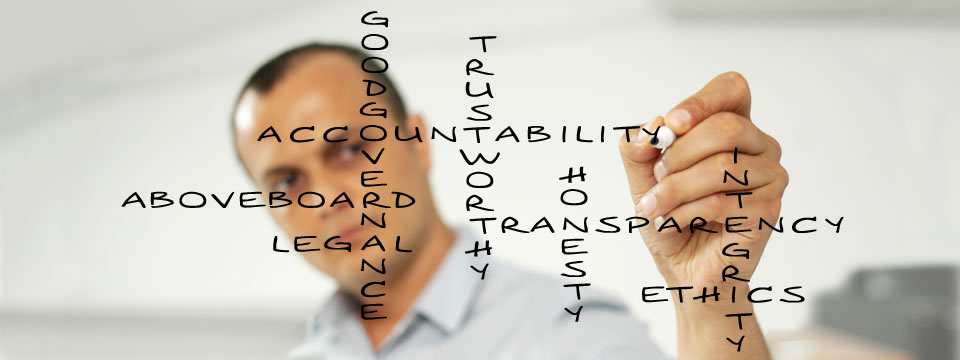
Proper functioning of our government, including our local government, requires ethical conduct by our government officials. This especially applies to our elected officials–our City Council–as they are our leaders. And as our leaders, through their words and more importantly, through their actions, City Council members establish the ethics culture for the city. Unfortunately, ethics for some council members is nothing more than a word. It is not a value that guides their everyday actions on behalf of citizens. (We will have much more to say about this in future posts.)
Ethics does get a lot of lip service from some Council members. They like to tout that Milton is a “Certified City of Ethics.” The Georgia Municipal Association grants this certification. To obtain GMA’s ethics certification, a city must fulfill two requirements.
First, the city must pass an annual ethics resolution espousing the GMA’s 5 ethics principles:
Serve others, not ourselves
Use resources with efficiency and economy
Treat all people fairly
Use the power of our position for the well being of our constituents
Create an environment of honesty, openness and integrity
Interestingly, over the past 19 months, citizens have been witness to violations of each of these principles. For example:
Can we really say that Council Members are not serving themselves when Council Members do not recuse themselves from matters where a developer with business before Council has provided large campaign contributions to the City Council Members? Isn’t the purpose of such contributions to curry favor with certain Council Members? To sway their votes?
Can we really say that all people are treated fairly when Council Members provide citizens’ private contact information to developers, so that those developers can lobby those citizens to support their projects? Or when Council Members attack private citizens from the council dais and in the newspaper, comparing citizens that oppose their views to non-patriots and to protesters that spit upon returning Vietnam veterans?
Can we really say that Council Members that shamelessly promote a developer’s project really promote the well-being of our constituents?
Can we really say that Council Members are creating an environment of honesty, openness, and integrity when Council Members flagrantly use personal and company e-mail to conduct City business, rather than their city-issued e-mail accounts? Or when Council Members intentionally circumvent staff and government processes to achieve their objectives?
Of course, these are rhetorical questions. We know that several Council Members act unethically without even the slightest bit of concern.
Second, the GMA requires that a city adopt an ethics ordinance that at least meets GMA’s minimal standards. Milton has adopted such an ordinance. It is 20 pages long and detailed. And we suppose that it does, in fact, meet GMA’s standards. However, does GMA certification mean Milton City Council members act ethically? No, it does not, and even the GMA would concede this point.
Passing an ethics resolution means very little. More important is that Milton has crafted an ordinance that meets GMA standards. However, ultimately the ethics ordinance must be enforced. And to be enforced, a citizen must make a complaint. The City of Milton will not (or certainly does not seem inclined to) investigate ethics violations. Ethics enforcement is left to citizens. Since the City overhauled its ethics ordinance, there have been no substantive ethics complaints.
We believe the time is right to test whether the City is truly serious about ethics. There is too much bad behavior from certain Council members to continue to ignore ethics violations. Ignoring the misdeeds of Council Members has only served to embolden those Council Members and prompt them to double down on their misbehavior. The Milton Coalition is committed to filing an ethics complaint, when appropriate, to ensure our City Council Members actually comply with GMA ethical standards. Council needs to walk the Ethics talk. And when they do not, citizens need to challenge them.
Transparency is a key element of good governance. Transparency means that “information should be provided in easily understandable forms and media; that it should be freely available and directly accessible to those who will be affected by governance policies and practices, as well as the outcomes resulting therefrom.” (Source: governancepro.com). More simply stated, transparency means citizens can easily see inside their government to see how decisions are made. This often means that our government makes its records available to citizens. Georgia has an Open Records Act that provides rules that government entities must follow. For example, citizens can make Open Records Requests (ORR) that generally must be fulfilled within three business days.
The ORR is the most often used method for accessing government documents. The Milton Coalition has submitted a number of ORRs for emails related to various issues. To our dismay, we have found that some Council Members sometimes use non-city (i.e., personal and business) e-mail for City business. Let us be clear. This is a violation of good governance practices. Use of personal and business e-mail is non-transparent. Why? The reason is that city staff performs a search of the city’s server for a Council Member’s City e-mail when an ORR is submitted. You are assured of a thorough and honest search by an objective professional. However, when Council Members use personal and business e-mail accounts, the City requests that a Council Member search those e-mail accounts. Staff must trust that a thorough and honest search is conducted by the Council Member; no independent verification is performed.
The Milton Coalition has checked with the Georgia Attorney General about the use of personal and business e-mail. The use of such e-mail is not banned. However, the reason for allowing personal and company e-mail is that many small municipalities in Georgia do not have servers or issue government e-mail accounts. By necessity, city business must be conducted using personal or company e-mail accounts. However, the Attorney General stated that in cases where a city has its own server and Council Members have city e-mail accounts, Council Members should not be using personal or business e-mail accounts, except under exceptional circumstances (e.g., the city server is inoperable). Use of such accounts does not accord with good governance and encourages non-transparency (e.g., withholding/deletion of e-mails).
One Milton City Council Member, Karen Thurman, shifts seamlessly between city, personal, and business e-mail accounts. Having long followed this practice means that many non-city entities (e.g., constituents, Non-Milton government officials) have unconsciously defaulted to using Ms. Thurman non-City e-mail addresses. In so doing, it is likely that much of Ms. Thurman’s city government business never crosses our City server. This means that a lot of City business is sitting on non-accessible, private (perhaps unsecured) servers rather than accessible, secured government servers. This should make most reasonable citizens very uncomfortable.
The Milton Coalition requests that the City of Milton consider an ordinance that would ban the use of non-City e-mail accounts for conducting City business for all staff, City Council members, and anyone else that has been granted a city e-mail account. It is time that the City start taking concrete steps to improve transparency. Restrictions on the use of non-City email for conducting City business would be a good first step.
We are covering 2 topics today: 1) video of the Board of Assessors meeting on June 15th and 2) the City of Milton’s two most important documents (the Charter and the Comprehensive Land Use Plan).
I. Board of Assessors Meeting
Fulton County has posted the full video of the Board of Assessors meeting on June 15, 2017. It is actually very interesting to watch. The comments from both our elected officials and citizens were passionate and pointed. Following is a link to the video:
12:00 Statements by 3 elected representatives in the following order: Fulton Commission Chairman John Eaves, Vice Chair Bob Ellis, and State Senator John Albers. All gave great remarks. Senator Albers gave a fiery speech that is a must-see.
30:30 Remarks by Milton’s Mayor Joe Lockwood. Mayor Lockwood was the only mayor that addressed the BOA.
37:00 Remarks by Tim Becker of the Milton Coalition.
1:41:30 Vote against moving up the discussion and vote on whether to freeze property valuations at 2016 levels. We knew that with this vote, the BOA was signalling that it would not rescind property appraisals. At this point, most citizens filed out of the assembly hall. This was a supreme act of insensitivity and cowardice on the part of the BOA. But we suppose they wanted to discuss and vote in a mostly empty room.
3:35:30 Discussion and Vote on Rescinding the 2017 property appraisals. The discussion lasted less than 5 minutes. Such little deliberation on such an important issue was an insult to citizens, again demonstrating the insensitivity and arrogance of the BOA (excepting RJ Morris, who has consistently been the only voice of reason on the BOA).
Council Member Matt Kunz also addressed the BOA during public comment, along with a few other elected officials.
II. Milton’s Foundational Documents: Charter and Comprehensive Land Use Plan
To understand the politics of Milton and the problems currently plaguing our City government, citizens must have a basic understanding of 1) the City Charter and 2) Comprehensive Land Use Plan (CLUP). These documents are the cornerstones of our local governance. The Charter and CLUP guide many of the day-to-day actions and activities of our government. Good governance in Milton depends on these documents being respected and upheld.
Milton’s Charter is like Milton’s version of the U.S. Constitution. It established our city and provides the basic structure of our city government.
The Comprehensive Land Use Plan (CLUP) is Milton’s long-term strategic plan for land-use. It is a detailed document that lays out a vision for land use but also includes specific guidance on how Milton’s land is to be developed. It is important because so much of our government activity revolves around development.
Because of the Charter and CLUP’s importance, the City has established rigorous and transparent processes for amending these documents. Changes to these documents require serious discussion and debate that should involve opportunities for citizen input.
In the coming days, at this blog, we will discuss the Charter and CLUP in greater depth: what they are, why they are important, the process for amendment, etc. We will also discuss how some in our Milton government, notably certain city council members, have shown blatant disregard and disrespect for the Charter and CLUP.
The Milton Coalition has achieved two important milestones that serve as a good segue into today’s post.
Our re-launched blog has received 1000 new hits over the past 3 weeks. In total, our two blogs have been viewed over 6000 times by citizens.
Our Petition for Smart Land Use and Good Governance reached 1900 signatures. Just in the last 3 weeks, over 100 Milton voters have signed. In total, the Milton Coalition’s 2 petitions have garnered over 2331 unique voter signatures.
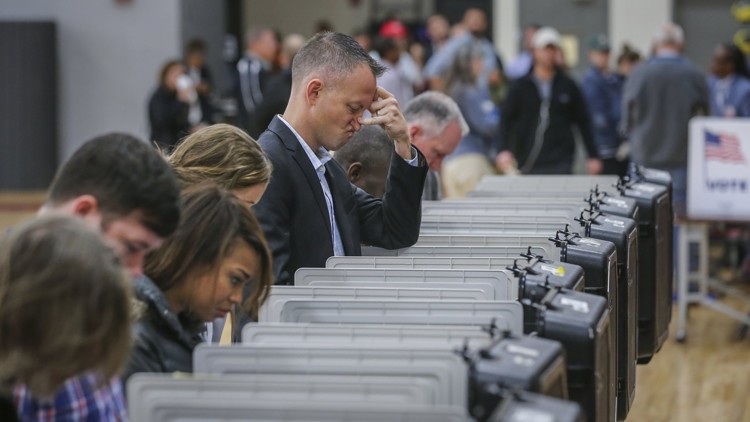
Why is this meaningful? We believe that the 2011 Milton city election is a good reference point. That was Milton’s last competitive city election. Milton’s city elections occur in odd-numbered years, when there generally aren’t any state or national races. This means that the only the most informed and most committed voters turn out . . . people like you that read blogs and that sign petitions. In 2011, about 3,300 voters showed up at the polls in Milton. So 2,331 Milton voters (70+% of the total votes in 2011) pledging to vote against politicians that do not uphold principles of smart land use and good governance is powerful. And we have every reason to believe that these citizens will show up at the polls . . . and get their friends and neighbors there also. Our metrics show our supporters take action at 3X the rate normally associated with citizen advocacy groups. Our hope is that eventually 3,300 people will sign our petition . . . 100% of the votes cast in 2011.
We are seeing the power of citizens in the current people’s revolt against arbitrary and inflated property tax appraisals. Last week, in Alpharetta, many hundreds of taxpayers passionately expressed their displeasure at Commissioner Bob Ellis’s town hall meeting. On June 14th (at 7 pm), Commissioner Liz Hausmann will host a town hall meeting at Johns Creek High School’s auditorium. Based on the Alpharetta turnout, the venue was changed to ensure enough capacity for citizens. Citizens need to once again show up in great numbers and with attitude. The chief appraiser and some members of the Board of Assessors are going to attend. The following day, these same government officials will meet to decide whether to roll back appraisals to 2016 levels. The dissatisfaction of citizens over the unfair tax increases needs to be fresh in their memories as they deliberate about whether to rescind the 2017 appraisals.
Citizens, we get the government we deserve. If citizens educate themselves and engage, we get better outcomes. We have seen this time and again in Milton. Petitions, writing to elected officials, and showing up & speaking at meetings with elected officials does make a difference. The Milton Coalition is committed to providing a platform for citizens to easily learn about and engage on the issues that matter most in our city government. Only through organized action can we achieve good governance. As always, thanks for your ongoing support.
Memorial Day is a time to remember and honor those veterans who died in defense of our country and the principles upon which it was founded. This remembrance will take many forms: parades, laying of wreaths, planting of flags, and the like. These are all appropriate ways to honor our fallen veterans. However, the best way to honor veterans that made the ultimate sacrifice is to uphold the rights and principles they died defending. The best way for our government to honor these veterans is provide good governance to citizens. This means honoring and respecting the rights of all citizens: to speak freely, to petition the government, and to freely assemble. It means providing government that is clean and competent. It means providing government that is fair, responsive, and transparent. And it means understanding that government “derives its just powers from the consent of the governed.” That is, citizens should be at the center of everything government does. The Milton Coalition is committed to honoring our fallen veterans by ensuring that our local government reflects the will of its constituents and serves its citizens well.
Advocating For Citizens,
The Milton Coalition
A non-partisan group of concerned citizens advocating for clean, competent, courageous, and citizen-centric government










 So 2,331 Milton voters (70+% of the total votes in 2011) pledging to vote against politicians that do not uphold principles of smart land use and good governance is powerful. And we have every reason to believe that these citizens will show up at the polls . . . and get their friends and neighbors there also. Our metrics show our supporters take action at 3X the rate normally associated with citizen advocacy groups. Our hope is that eventually 3,300 people will sign our petition . . . 100% of the votes cast in 2011.
 May 29, 2017
 Milton Coalition