July 12, 2026: I am posting a correction to this blog post. See below note in red.
Election Day for the District-47 Georgia House Seat Republican Run-off is June 16th. Please vote.
The previous Milton Coalition Blog post endorsed Brian Cochran. That post emphasized Brian’s stellar qualifications to represent D-47, only implicitly referencing his opponent Jack Miller’s missteps. This blog post will be more explicit in explaining Miller’s blunders, which strongly point to Cochran as the more pragmatic choice for Republican voters, both in terms of electability and legislative effectiveness (should he be elected).
I have known both Jack and Brian for many years. Both Jack and Brian are fine young men. However, Jack has stumbled and lost his way, although he has belatedly taken some actions to rectify his errors. Unfortunately, through his missteps, Jack has weakened his standing with voters, reducing his odds (once quite high) of winning the general election and diminishing his future legislative influence should he prevail in the elections.
When the campaign began, I was all-in for Jack. However, as Jack’s campaign progressed, I (and other voters) became increasingly troubled by several issues. While some issues were deeply concerning, individually, they were not deal-breakers: an unfair head start; copious, dubious, and entangling politician endorsements; a dull and uninspiring campaign; questionable tactics; and an injection (from PAC advertisements) of divisive national politics. Notwithstanding these other issues, one issue predominated and is disqualifying for Jack in the run-off election: Gambling Dark Money campaigns conducted on Jack’s behalf that he accepted and from which he has immensely benefited. I estimate the Gambling Dark Money expenditures to be $300,000+. Sadly, Jack’s public responses to these expenditures have been too little, too late. Gambling Dark Money is Jack’s Achilles Heel and could dog him all the way to November. The Gambling Dark Money fiasco is Exhibit A in the case for Brian Cochran being the more pragmatic choice for Republican voters. The Democrat opponent, Lindsay DeFranco, will relentlessly wield Dark Money as a cudgel against Jack. In fact, Ms. DeFranco recently sent her first mailer to voters, with a sole focus on Gambling Dark Money.
(Corrected July 12, 2026. See above introductory note in red. I have concluded that Ms. DeFranco was not behind the referenced mailer, which was anonymous.)
The Dark Money campaigns also hurt Jack by nonsensicallytying him to divisive national politics. Prudently, neither Jack nor Brian has referred to national politics in their election communications. Both occupied a right-of-center lane in the campaign. In contrast, the PAC campaigns for Jack maladroitly injected national politics into the run-off, pulling Jack’s campaign messaging unnecessarily Rightward. This is certain to hurt Jack, if he is the Republican nominee; pivoting closer to the campaign centerline (needed to win the general election) will be difficult. The explicit linkages to national politics are yet another weapon Ms. DeFranco can employ. She can now portray Jack as too extreme for D-47 . . . creating unease among Independents and more moderate Republicans needed to win the election. Conversely, Brian Cochran is unsoiled; he has wisely avoided being dirtied by national political rancor.
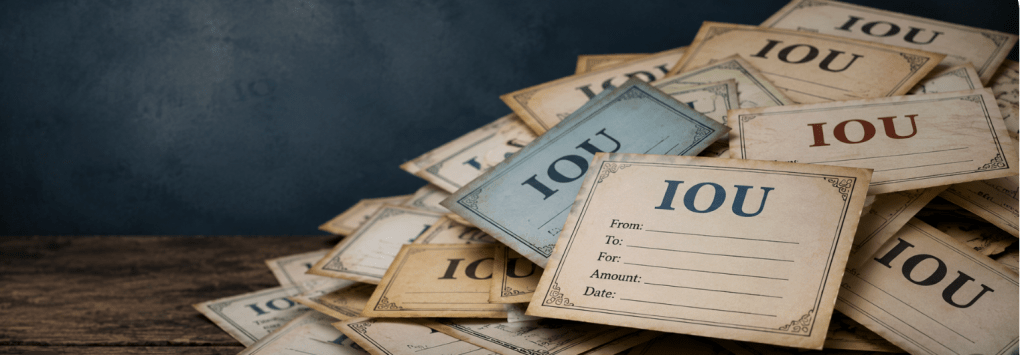
Lastly, Jack poorly executed his endorsement strategy. To his credit, Jack has taken down his website’s endorsement page. However, much damage has been done (and can only be partially repaired). There were several issues with Jack’s endorsement strategy. First, many persuadable voters recoil at entrenched politicians telling them how to vote. Many such voters now view Jack as just another political insider and establishment politician. Second, staring out from Jack’s bingo card of endorsements were several sketchy endorsers that Ms. DeFranco can now link to Jack. And in fact, Ms DeFranco is already citing questionable endorsements in her online posts. Third, and most-importantly, Jack’s endorsements mean he returned a lot of valuable IOUs (he had earned while working on various election campaigns) to their originators. Jack is no longer a political creditor, but rather is now a political debtor . . . deeply in debt to a bevy of politicians as well as to immensely powerful gambling corporations. And unfortunately, Jack’s accumulation of so much political debt and his entanglement with so many career politicians (plus his association with Gambling Dark Money) could limit his effectiveness in the House–should he be elected. Brian has none of this baggage. Brian’s lack of obligations makes him more electable and potentially more effective as legislator (than Jack). Brian Cochran is beholden to no one.
Jack’s self-inflicted wounds have certainly diminished his political standing, perhaps fatally. Pragmatism suggests that Brian Cochran is the more electable candidate and (potentially) more effective legislator. However, putting aside his lack of political baggage (that make him the more pragmatic candidate), Brian Cochran is a strong candidate in his own right. Brian has a demonstrated track record of fighting for our civil liberties. Brian is a man of courage, integrity, and competence. His expertise in technology is critically needed at the state house, especially in sensibly regulating AI. Brian is unequivocal in this opposition to gambling, including referenda that would pass the legislative buck to citizens. Against all odds and despite rivers of PAC money being spent for the benefit of his opponent, Brian vaulted into the run-off. Brian self-managed and (mostly) self-financed an impressive, enthusiastic, and authentic grassroots campaign. However, Brian needs your help to cross the finish line. Please join your fellow citizens in voting for Brian Cochran . . . the pragmatic choice and the best choice for District 47.
Following are some links to Brian’s campaign websites:
I am also including a letter from Brian to voters in which he makes his closing argument for your vote.
This is likely my last long-form blog post before election day. However, I will continue to publish shorter posts at the Bits and Pieces blog page; such posts do not generate emails to blog subscribers, who will need to directly access the Bits and Pieces page for the latest analysis of the D-47 election. Following is a link: Bits and Pieces
In my last post, I promised an analysis of the District 47 race. Here it is . . .
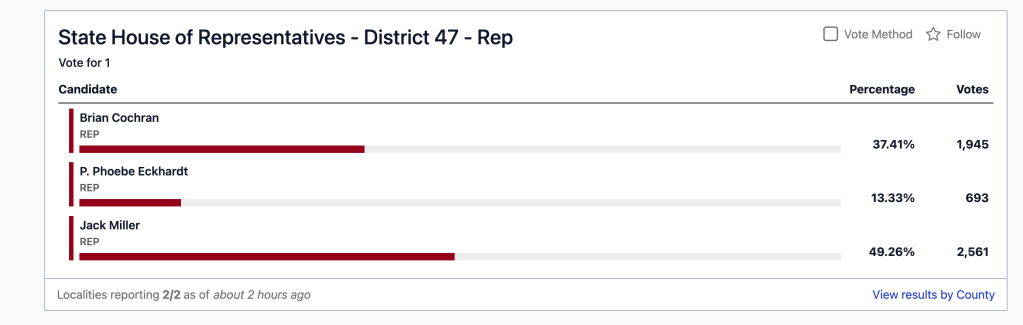
The recent District 47 Republican primary was a political shocker. Jack Miller, the heavyweight favorite and local political Wunderkind, was expected to effortlessly flatten his two (supposedly) flyweight competitors: Brian Cochran and Phoebe Eckhart. However, voters delivered a different outcome with a loud thud. Mr. Miller fell short of the 50% threshold by 39 votes and was forced into a run-off with Brian Cochran, a political newcomer. Through their ballots, voters protested gambling SuperPACs dumping upwards of $300,000 (or more) of dark money into the race and injecting divisive national politics into an otherwise civil campaign. Voters also disregarded an avalanche of endorsements from local political glitterati. Rather than a coronation, voters opted for further vetting of the candidates. That’s good for everyone, even Mr. Miller.
Left: Brian Cochran; right: Jack Miller
Before I go further, it is important to understand that both candidates—Jack Miller and Brian Cochran—are qualified to represent District 47. I knew both candidates before they announced their candidacies (See Note 1). Last week, I had extended and enlightening conversations with both candidates. Both have good character and are strong in their faith. They agree on most major issues and are (mostly) taking the right positions on these issues. It is refreshing to see two sharp young men—both still in their 20s—enter the political arena. It should engender hope in citizens for the future of our country. We need more Jack Millers and Brian Cochrans, rather than the failure-to-launch young people we too often encounter these days. It is rare for a political race to offer two qualified choices. More often, the choice is between two terrible candidates: hold your nose . . . pick the least bad candidate, and . . . hope for the best. Rinse and repeat.
The District 47 run-off not only offers two qualified candidates, but better still . . . some sharp contrastsexist between the Miller and Cochran that should make vetting easier for many voters. Only one candidate will win. Hopefully, the runner-up will remain engaged in politics and seek and win another elected position.
Unfortunately, Jack Miller has a problem . . . and it is a big problem . . . a problem that will likely dominate the debate and discussion until election day. There is a perception (and perhaps it reflects reality . . . voters must decide) that Miller is being bought with dark money (from gambling PACs) and with political endorsements. The dark money has created another problem for Miller . . . divisive national politics have unnecessarily infected the campaign, alienating many voters.
When the campaign began, I was all-in for Jack Miller. He called me soon after his announcement. I offered financial support, advice, and my endorsement. His initial mailers were professional and on message. However, as the campaign progressed, like many voters, I began to have concerns that evolved into deep reservations and eventually convinced me (and many others, it seems) to vote for Mr. Cochran. Mr. Miller’s campaign became lackluster, almost as if outsourced to a campaign consultant. (Mr. Miller is employing a consultant; Mr. Cochran is not.) Miller’s campaign seemed to be coasting on autopilot . . . perhaps based on an assumption of electoral inevitability . . . a reasonable assumption as Mr. Miller has many advantages over Mr. Cochran. However, advantages are often double-edged swords—harmful if wrongly wielded, which some were. Two factors—the corrosive influence of gambling PACs (and their dark money) in the race and a deeply flawed endorsement strategy—tipped the scales for meand many other voters. I was conflicted but ended up voting for Mr. Cochran in the primary. (However, I am an undecided voter going into the run-off . . . I am waiting to see how things play out.)
So let’s dive deeper into Mr. Miller’s loss at the polls. (See Note 2.) Let’s analyze the two primary factors in Mr. Miller’s defeat: 1) the negative impact of gambling PACs and their dark money in the race and 2) a poorly executed political endorsement strategy.
The first and much more important factor in Miller’s defeat was the flow of copious amounts of dark money into the race—most of it tied to gambling PACs. This will not play well with most local Republican voters (regardless of whether they support expansion of gambling or not). I received no fewer than 16 mailers paid for mostly by gambling PACS (See Note 3 for an explanation of dark money, PACs/SuperPACs and how this all works). At $6,000 to $9,000 per mailer, we’re talking $96,000 to $144,000 just for mailers. However, the PACs are also conducting a coordinated media campaign, including ads on Fox News. So it is fair to estimate that upwards of $300,000 (or maybe more) of dark money has been allocated to promote Mr. Miller; no dark money is being spent on Mr. Cochran. Even now, this dark money is continuing to flow in support of Mr. Miller. The main PAC supporting Miller is spending $10M ($7.8M going to Republicans and $2.2M to Democrats) statewide on 34 races . . . if you do the math, that’s nearly $300,000 per race. (Source: AJC. See Note 4 for links to articles from AJC and other news sources about the gambling industry’s intrusion into state legislative races.)
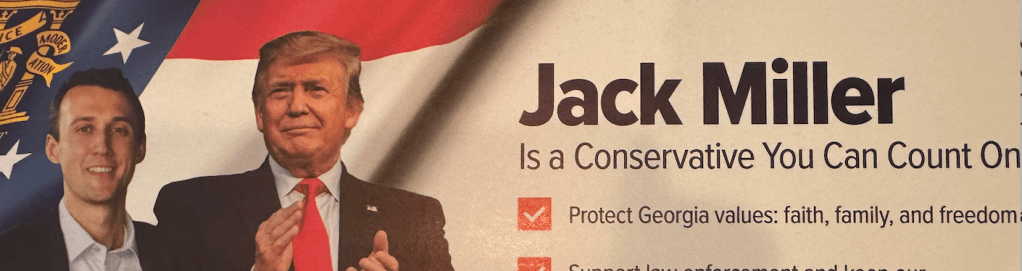
The expenditure of so much dark money is bad enough, but another big problem emerged for Mr. Miller because of this media campaign. The PACs’ messaging and presentation were often poor and off-target, especially the clear and repeated references to divisive national politics. Until the dark money appeared, neither candidate had mentioned Trump . . . and neither has ever done so in their communications. And based on my conversations with both candidates, their positions on Trump are similar and both stated they are opposed to injecting national politics into the District 47 race. District 47 is certainly a Red district but it is a nuanced sort of Red . . . the persuadable voters that decide elections in Milton (and in contiguous areas) do NOT like appeals to raw partisanship . . . so these dark money communications could be damaging Miller . . . understandably so.
Photo from PAC-financed mailer
So what does this all say and mean for Jack Miller’s candidacy? Miller asserts that he has no control over these PAC expenditures. Technically, that is true. Candidates are forbidden to COORDINATE with PACs, BUT . . . and this is important . . . candidates can COMMUNICATE with PACs. A candidate can certainly send a letter to a PAC to demand the PAC cease its efforts. The problem for Miller is that he went along with the actions of the gambling political machine; he did not protest (and still has not). While he had concerns (particularly around the messaging and presentation), my opinion is that his campaign believed the dark-money promotion would help him (or perhaps not hurt him enough that he would lose the election). They were wrong. Where I fault Miller is his not investigating the PACs’ ties and agendas and subsequently not disavowing them. Miller says he was not aware of the dark money ties to gambling interests. Perhaps that is true, but he should have known . . . that’s the crux of the matter. These PACs have been extensively exposed in the press, so it is not hard to figure out who they are and what they are promoting. (See Note 4 for links to articles detailing the activities of the primary SuperPAC and primary PAC supporting Miller.). And remember that Miller is a seasoned political operative with an extensive political network and a paid campaign consultant, so voters are likely not to accept an excuse of inexperience or ignorance from Miller.
The second but lesser factor in Miller’s loss was a poorly executed endorsement strategy. Most of the North Fulton political establishment has endorsed Miller. The gist of Miller’s endorsement strategy seems to be: the more politicians who endorse me, the better. However, with endorsements (as with most things), eventually you reach a point of diminishing returns and later a point of negative returns. Some endorsements are better than others. Others provide no benefit, so just muddle your message. And still other endorsements are just harmful . . . and there were a few of those in Miller’s endorsement portfolio. Rather than carpet-bomb voters with a dog’s breakfast of endorsements, Miller should have communicated a thoughtful and curated selection of more impactful endorsements. (See Note 5 for my advice to Miller on endorsements.)
I received one mailer from Miller that had 24 endorsements! And every endorser was a politician–several held in low regard by citizens. Not a single business leader or other type of community leader was included. For many voters, this is a huge turn-off. Voters recoil at the local political elite telling them how to vote. And the sophisticated, persuadable voters that decide elections realize that such endorsements come with lots of strings. They create obligations for Mr. Miller. Miller has issued bushels of IOUs that could limit his effectiveness. He is now beholden to these endorsers. Again, the perception (and perhaps it reflects reality . . . voters must decide) is that politicians have bought Miller with their endorsements. Don’t misunderstand. Strong and healthy relationships with current and former elected officials are beneficial. These relationships are valuable and take time to develop. Certainly, Miller can and should play the experience card and assert he can hit the ground running; Cochran cannot say this. However, the issue is NOT the political relationships; the issue IS the endorsements and associated obligations. Yes, Miller can hit the ground running, but will he trip over all the IOUs he has issued?
So did the gambling PACs and endorsements hurt Miller? It is difficult to say. Miller certainly believes the gambling PACs hurt him. To prove his point, Miller points out that he won the early vote and lost the election day vote. He logically concludes that the increasing surge of dark money mailers, ads, etc. pushed voters (including me) toward Mr. Cochran. And to make matters worse . . . in my opinion, the message that Mr. Miller was being bought was reinforced by all the endorsements he sought and was granted from the local political establishment—several from disgraced/discredited politicians.
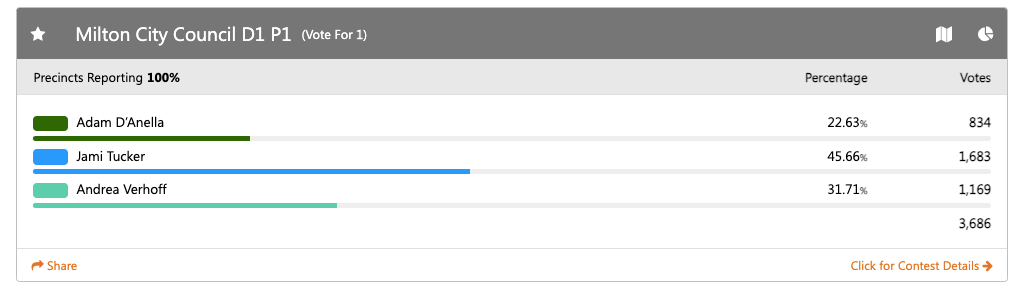
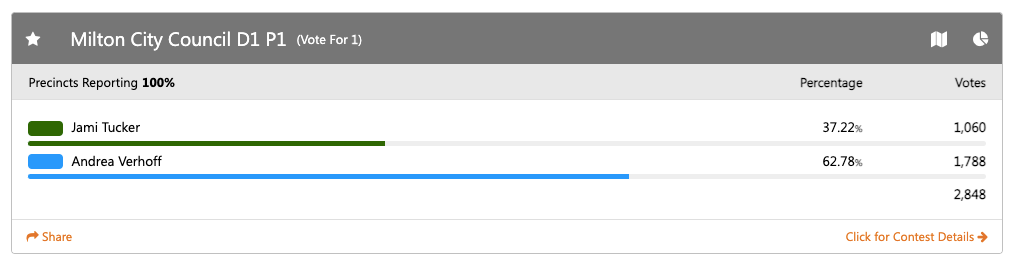
A big positive for Miller is that he came very close to winning 50% (+1 vote) in the first primary. However, the third-place finisher Phoebe Eckhart has endorsed Cochran. Cochran clearly has the momentum coming into the run-off. And Miller is on the defensive. Additionally, my sense is that fewer voters will vote in the run-off; this is typical. This could also hurt Miller, as Cochran’s voters seem more enthused so more likely to show up in proportionally higher numbers. (See Note 6 for a recent example of a Milton city council runoff where the second-place finisher handily beat the first-place finisher.)
Despite all this, I believe Miller is still the favorite to win and Cochran is still the underdog. I believe the race will be close. I give Miller a 65-75% chance of winning. However, it will depend on how Miller addresses the two factors that caused his defeat. I suspect his consultant and his political advisors will tell Miller to ignore the gambling issue . . . don’t give it any Oxygen . . . change the subject. I know some of Miller’s political advisors well and I can tell you they don’t know boo about winning elections and even less about integrity. I believe Miller will flip the odds in Cochran’s favor if he doesn’t acknowledge the gambling issue, state unequivocally his opposition to expanding gambling in Georgia, and disavow the PACs that are supporting him. This action is not only the right thing to do, but it will also maximize Miller’s chances of victory. However, time is running out . . . or maybe has run out. If Miller delays much longer in not addressing this issue, any 11th hour disavowal will be justly viewed as disingenuous. You can’t eat the steak but then refuse to pay the bill because the steak wasn’t to your liking (to quote Judge Judy).
Regarding his poorly executed endorsement strategy, there is not much that can now be done. What’s done is done. You cannot really “return” endorsements, although Miller might quietly take down controversial endorsements from his website. What Miller can do is de-emphasize endorsements in his communications and reassure voters that he is his own man and not beholden to any politician or Special Interest.
Miller needs to respect the intelligence and integrity of his North Fulton voters. They are tough but fair. Honesty and sincerity—that’s the Jack Miller I know—are the best way to finish out the Republican primary. Same goes for Mr. Cochran.
In another post, I will compare the candidates. There are several areas where there are significant contrasts that should make candidate vetting easier.
Voters, this is a hugely important election. I urge readers to share this post with fellow voters through social media or forwarding a link to the blog via e-mail.
Advocating For Election Fairness and Integrity,
Tim
Note 1: I have known Jack Miller since 2017, when we both were involved in Laura Bentley’s campaign for Milton City Council; we’ve maintained a friendly acquaintance since then. Although only 25, Jack is an experienced political operative who has worked in many political campaigns and is well-regarded. I’ve known Brian Cochran’s family for 25 years. (We were neighbors in the same subdivision. My wife and Brian’s mother were in a small Bible study group that spanned 3 years and the entire Bible.) However, I didn’t initially realize the Brian Cochran running for office was the same Brian Cochran we knew from the neighborhood where we lived 1993-2013. He’s grown into a fine young man with a great future ahead of him.
Note 2: I intentionally use the word “loss” to refer to Mr. Miller’s failure to garner more than 50% of the vote because his two challengers were both explicitly running against Mr. Miller and collectively did achieve more than 50% of the vote. Moreover, third-place finisher Eckhart has endorsed Mr. Cochran in the run-off.
Note 3: What I mean by “dark money” in the context of this blog post is money where the ultimate sources are anonymous or else difficult to trace. In some cases, the agenda of the PACs distributing such money is not mentioned in its promotional media. That is the case with most of the dark money supporting Jack Miller. The primary PAC conducting a media campaign on behalf of Miller is American Conservative Fund (ACF), which is primarily funded by Win For America, a gambling SuperPAC that doesn’t even have a public website. ACF does have a rudimentary website but nowhere is gambling mentioned. ( Link to ACF website: https://americanconservativefund.com/ ). None of their mailers (and other promotional media) for Miller mention gambling. So you can see that the efforts of these PACs and Super-PACs are non-transparent, deceptive, and manipulative. Win For America is reaching Democrat voters through a separate PAC, American Future, which also has only a rudimentary website that makes no mention of gambling. (Link to AF website: https://americanfuturepac.org/ ) So you can see that the goal here is to cynically use conservative and progressive talking points to manipulate Republican and Democrat voters to vote for candidates that the gambling interests believe will promote legalization/expansion of gambling. Ultimately, the gambling interests care nothing about conservative or liberal causes; they only care about buying politicians that will promote increased gambling.
Note 4: Following are links to articles explaining the intrusion of gambling PACs into state legislative races in GA, AL, and NC (and elsewhere). I am also including a link to the Moms Against Gambling website. MAG is putting up a valiant, but unfortunately under-funded, uphill fight against the gambling political machine. (Note: A subscription may be required to read the AJC articles.)
Note 5: I did suggest to Mr. Miller that he get all 7 Milton City Council members behind his candidacy. I believed such an endorsement would carry weight in the general election in the fall.
Note 6: Following are two screen shots of election results from the 2021 Milton municipal elections. The race went to a run-off. The leader in the general election, Jami Tucker, came close to winning; she came up 160 votes short. However, Tucker badly lost the run-off, dropping from 45.66% to 37.22%. Her challenger, Andrea Verhoff, surged more than 31 percentage points to win the run-off with a whopping 62.78% of the vote.